
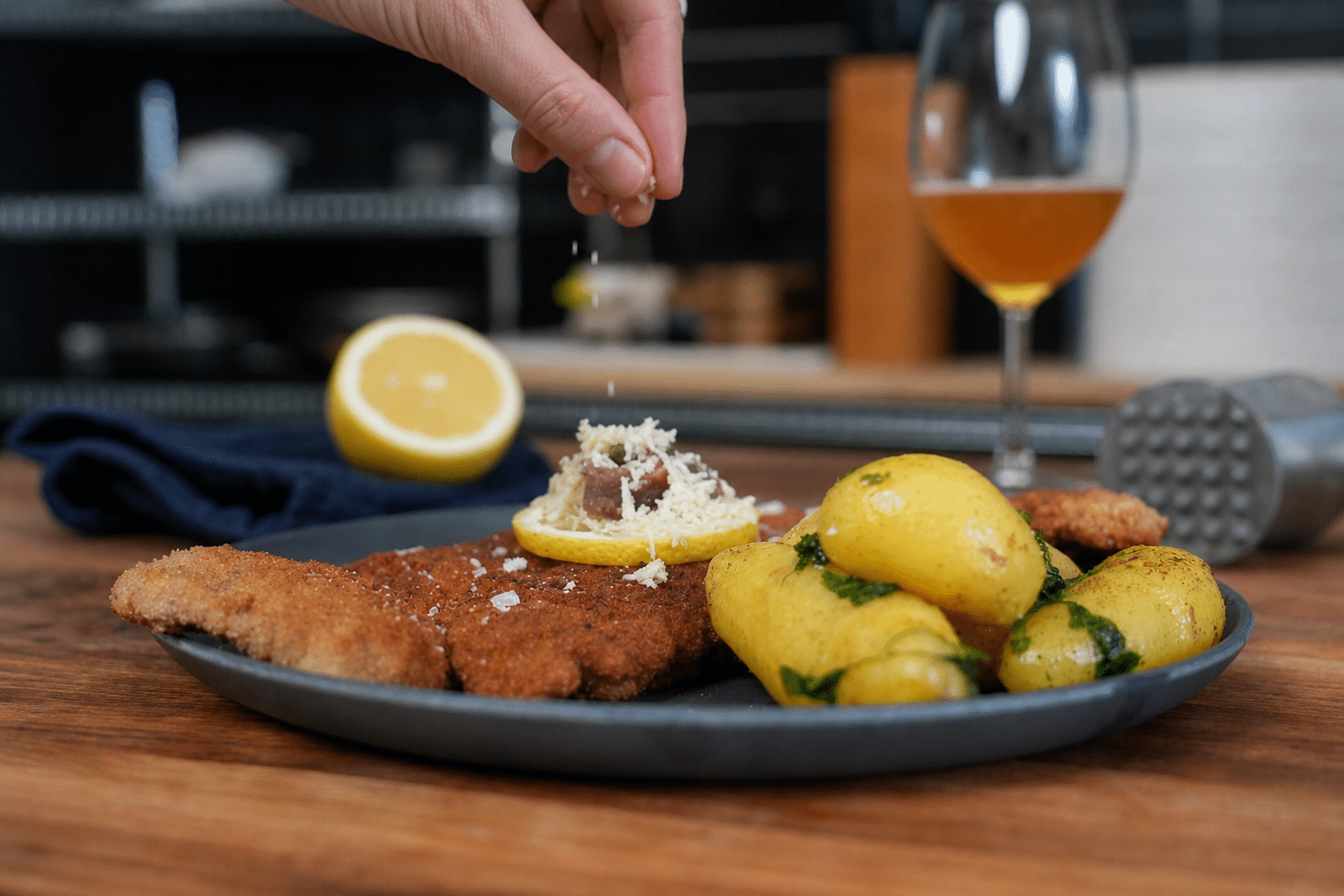

A proper Wienerschnitzel is veal pounded thin, coated three times in flour, egg, and breadcrumbs, then pan-fried in a generous mix of butter and oil until the crust is deep gold and shattering. The technique isn’t complicated, but most home recipes skip the detail that separates the real thing from a plain breaded cutlet.
That detail is the garnish. The traditional topping is called a “dreng” in Danish, the word just means “boy” or “lad” but as a culinary term it refers to a lemon slice loaded with anchovy fillets, capers, and freshly grated horseradish. It’s what the original recipe always included, and what most modern versions quietly dropped. The salty anchovy and briny capers cut through the richness of the fried breading, and the horseradish adds a clean, pungent heat that wakes the whole plate up. I always include it.
Serve with parsley potatoes and steamed peas.
Why this recipe works
Pounding the cutlets to an even 1/4 inch (about 1/2 cm) throughout is the most important step. Thick spots stay underdone while thin edges overcook. Work the mallet from the center outward and you’ll get a cutlet that cooks in the same 2 to 3 minutes all the way across.
The three-stage coating, flour first, then egg, then breadcrumbs, is not optional. Flour dries the meat surface so the egg grips; the egg acts as glue for the breadcrumbs. Skip a layer and the crust falls off in the pan.
The last thing is fat. Don’t hold back. A generous amount of butter and oil in the pan is what gives a breaded cutlet its crispy, golden crust. Too little fat and the breading steams instead of fries, and you get a pale, soft coating rather than a crunch. The fat is not the enemy here: it is the technique.
Read more: Beef wellington at home: the Christmas showstopper that is easier than it looks
Ingredients
Serves 2
For the schnitzel:
- 2 veal cutlets
- Scant 1/2 cup (100 ml) all-purpose flour
- 2 large eggs, beaten
- Generous 3/4 cup (200 ml) dry breadcrumbs
- Salt and pepper
- Butter and neutral oil for frying (be generous with both)
For the dreng (garnish):
- 1 lemon
- 4 oil-packed anchovy fillets
- 2 teaspoons capers
- Fresh horseradish root, for grating
For the parsley potatoes:
- 1 lb 2 oz (500 g) potatoes
- 1 tablespoon (20 g) coarse salt (for the cooking water)
- 10 stems flat-leaf parsley
- 2 tablespoons (25 g) unsalted butter
- Salt and pepper
Also needed: a handful of frozen peas, steamed
Instructions
1. Place each veal cutlet between two sheets of plastic wrap. Using a meat mallet or the bottom of a heavy pan, pound from the center outward to an even 1/4 inch (1/2 cm) thickness. Season both sides with salt and pepper.
2. Set up three shallow bowls in a row: flour in the first, beaten eggs in the second, breadcrumbs in the third. Coat each cutlet in flour, shaking off any excess. Dip it in the egg, letting extra drip off. Press it into the breadcrumbs on both sides until evenly coated.
3. Start the potatoes before you fry: peel or scrape them and put them in a pot with the cold water, salt, and the parsley stems (save the leaves for later). Bring to a boil and cook uncovered for 12 minutes, then cover and cook for another 8 to 10 minutes until a knife slides in easily.
Read more: Sprouted potatoes: when to trim, when to toss, and why cooking won’t fix it
4. Heat a large skillet over medium-high heat. Add a generous knob of butter and a splash of neutral oil. When the butter foams and the foam begins to subside, the pan is ready.
5. Add the breaded cutlets. Fry for 2 to 3 minutes per side until golden brown. The USDA minimum safe internal temperature for veal is 145°F (63°C), measured at the thickest point. Let the schnitzels rest for 3 minutes off the heat before serving.
6. While the schnitzels rest, cut two slices from the lemon. Place one slice on each schnitzel and top with 2 anchovy fillets, 1 teaspoon of capers, and a generous amount of freshly grated horseradish.
7. Drain the potatoes and return them to the warm pot. Add the butter and toss until coated. Roughly chop the reserved parsley leaves and stir them through. Season with salt and pepper.
Read more: The best gingerbread cookies for cutting and decorating, with a dough that holds its shape perfectly
8. Plate each schnitzel with its dreng garnish, parsley potatoes alongside, and the steamed peas.
Tips and variations
Veal vs. pork: Veal is traditional and gives the most tender result. Boneless pork loin cutlets pounded to the same thickness are a widely available substitute. Cook them to the same 145°F (63°C) with a 3-minute rest.
Fresh horseradish matters here: The dreng relies on the sharp, clean heat of horseradish root grated fresh on a microplane. Jarred creamed horseradish is milder and much softer in flavor, it won’t give you the same contrast. Fresh horseradish root is available at well-stocked grocery stores and farmers’ markets.
Anchovies for depth, not fishiness: Good oil-packed anchovy fillets, balanced by the capers and horseradish, add a savory saltiness rather than an overwhelming fish flavor. The combination is more subtle than it sounds.
Bread ahead if needed: You can coat the cutlets up to an hour before frying. Set them on a wire rack in the refrigerator, uncovered. The coating dries slightly, which actually helps it cling and crisp up in the pan.