
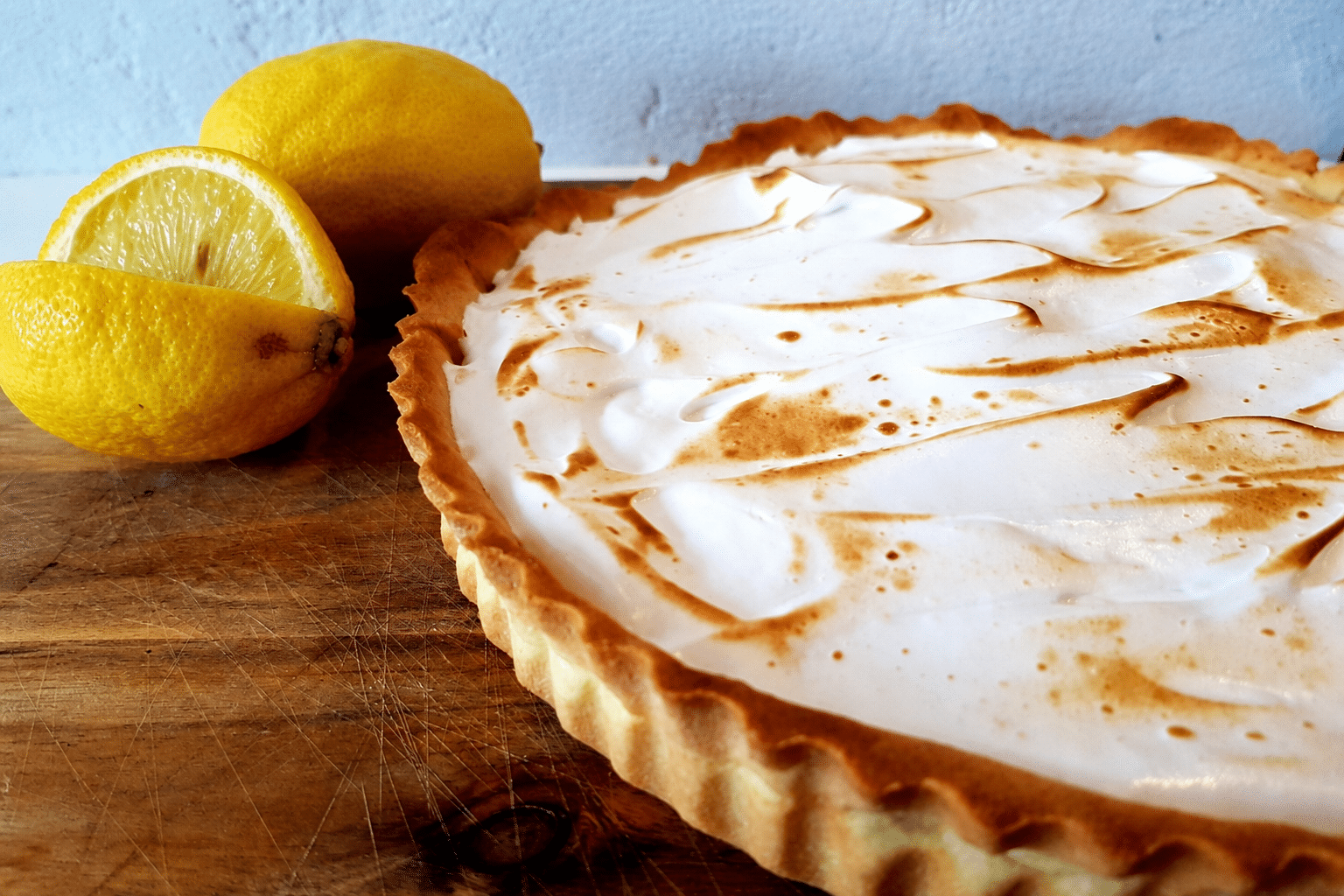

I’ve made quite a few desserts over the years, but a good lemon tart is one that guests always compliment. This French classic has everything a great dessert needs: a buttery, crisp shortcrust base, a silky lemon cream with real brightness, and a cloud of meringue that takes its color from a kitchen torch. It is a three-part project, but every part can be made ahead, so by the time your guests sit down, the hard work is already in the refrigerator.
The balance between sweet and sharp is what makes this dessert so good. The lemon cream is not timid, it has real edge to it, but the powdered-sugar meringue and the buttery pastry pull it back into balance. Getting that tension right is what the recipe is built around.
Why this recipe works
When I make this tart, there are three things especially worth getting right.
Read more: Kung Pao chicken from scratch: the Sichuan classic that beats any takeout order
The lemon cream is baked at 230°F (110°C) in a conventional oven, and that low temperature is not a quirk, it is the whole technique. High heat scrambles the eggs and turns the filling grainy. Low and slow keeps everything gentle, so the cream sets smooth and silky all the way through.
The meringue goes on last, once the base and cream are fully cold. Spread it onto a warm tart and the heat immediately softens everything beneath. Cold tart, completely stiff meringue, then a quick pass with the torch: that is the order that works.
Read more: Korean yangnyeom wings: double-fried crispy chicken in a sticky gochujang glaze
Ingredients
For the shortcrust base
- 2½ cups (300 g) all-purpose flour
- ⅔ cup (150 g) cold butter, cut into pieces
- Scant 1 cup (100 g) powdered sugar
- 1 egg
- About 2 cups (400 g) dried chickpeas or pie weights, for blind baking
For the lemon cream
- 2 eggs
- ½ cup (100 g) granulated sugar
- 2 tsp vanilla sugar (or 1 tsp pure vanilla extract)
- ½ tsp cornstarch
- 3 lemons, juice and zest
- ⅔ cup (150 ml) heavy cream
For the meringue
- 2 egg whites
- ¾ cup (85 g) powdered sugar
Instructions
Shortcrust base
- Combine the flour, cold butter, powdered sugar, and egg in a stand mixer and mix until a firm dough forms.
- Turn the dough out onto the counter, bring it together, wrap it, and refrigerate for 45 minutes.
- Roll out the chilled dough and press it into a tart pan. Line with parchment paper and fill with dried chickpeas or pie weights.
- Blind bake for 15 minutes at 340°F (170°C) convection, or 375°F (190°C) conventional.
- Leave the weights in the shell and let it cool completely on a rack before filling.
Lemon cream
- In a bowl, mix the sugar, vanilla sugar, cornstarch, and lemon zest together.
- Add the lemon juice, heavy cream, and eggs, then whisk until the mixture is smooth and evenly combined.
- Pour the lemon cream into the cooled tart shell.
- Bake at 230°F (110°C) in a conventional oven for 35 to 45 minutes. The filling is done when the edges are set but the center still has a gentle wobble, it will firm up as it cools.
- Remove from the oven and cool for at least 3 hours before topping with meringue.
Meringue
- Combine the egg whites and powdered sugar in a completely clean, dry bowl.
- Beat on high speed for 15 to 20 minutes until the meringue is completely stiff and glossy, holding firm peaks when you lift the whisk.
- Spread the meringue over the cold lemon cream in soft peaks and swirls.
- Use a kitchen torch to lightly brown the top.
Tips and variations
Make it ahead. This tart is at its best the day after baking. Make the base and lemon cream, then refrigerate overnight. Add the meringue and torch it just before serving.
Knowing when the cream is done. The filling should be set at the edges and still slightly soft in the very center. It firms up completely as it cools, so pulling it from the oven at that point is correct.
Read more: Banh mi with five-spice marinated pork: the Vietnamese sandwich worth making at home
Meringue that holds. Two things cause meringue to collapse: under-beating and spreading it on a warm tart. Beat for the full 15 to 20 minutes until it is genuinely stiff, this is not an exaggeration, and wait until the lemon cream is cold all the way through before applying the meringue.
Vanilla sugar. Vanilla sugar is a staple in European baking but harder to find in US grocery stores. Substitute 1 teaspoon of pure vanilla extract, stirred directly into the cream mixture with the other liquid ingredients.