
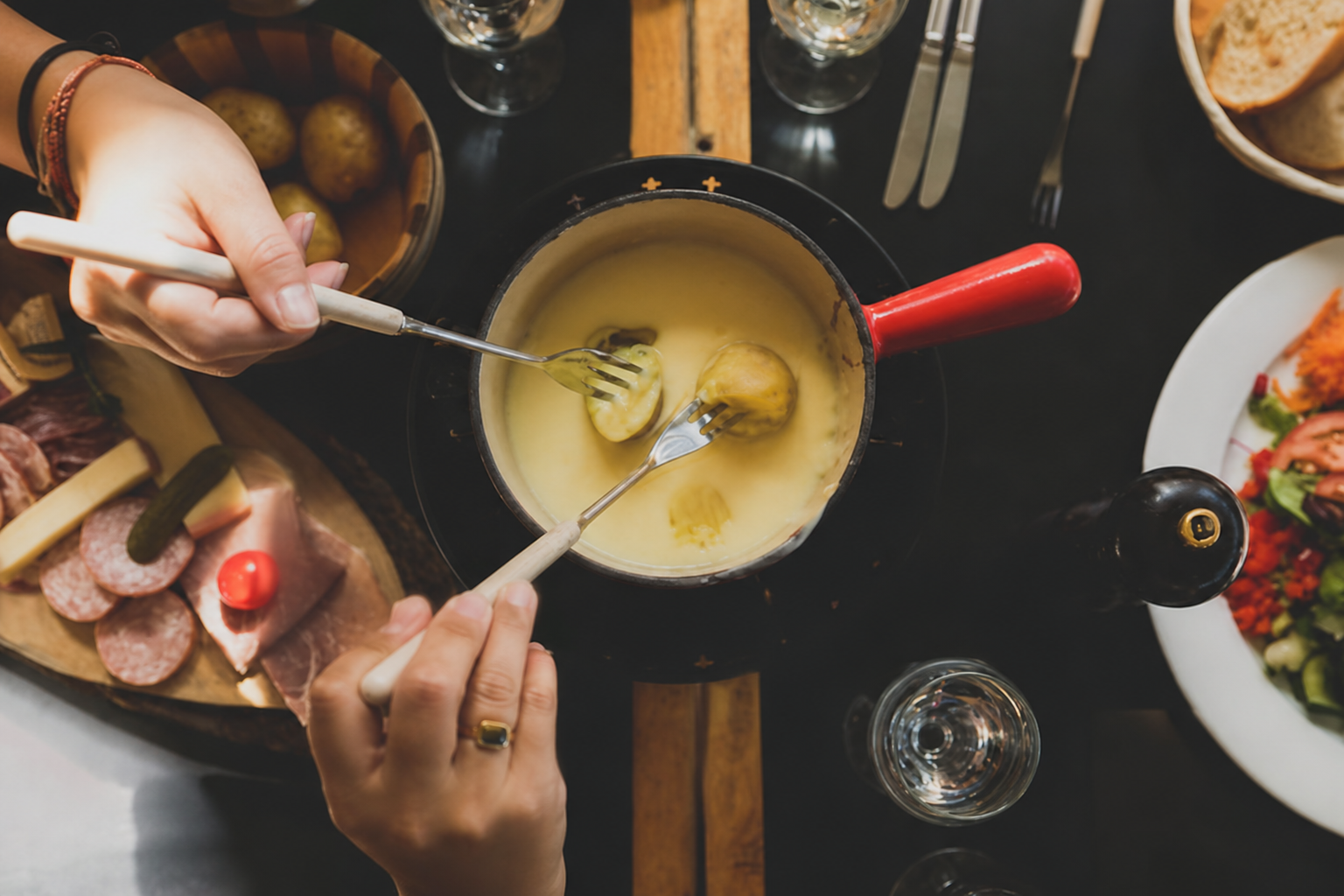

Cheese fondue and raclette are two classic dishes from the Alps, and both have earned devoted followings far beyond their mountain origins. The concept behind each is simple: heat good cheese until it melts, then eat together. But the two dishes work quite differently, and once you understand each one, you can pick the right choice for your table or, honestly, do both on the same evening.
Raclette: the original Alpine scrape
Raclette is a semi-soft, creamy cheese that was originally the food of herders and farmers working in the Alps. After a long, cold day in the mountains, people gathered around the fire to warm up and eat. The cheese was held near the flames, and as the surface melted, it was scraped off directly onto boiled potatoes, vegetables, and meat. The name comes from the French word “racler,” which means to scrape.
The raclette cheese you find in stores today is still made from the milk of cows that graze on the northern Alpine slopes. That milk gives the cheese its full, rounded flavor, shaped by the grasses and herbs of the region. It is made from raw milk and aged for two to three months, producing a smooth, creamy texture with a lightly spiced finish.
Making raclette at home
The traditional open-fire method is not exactly practical in a modern kitchen, but raclette is genuinely easy to do at home. The classic approach today uses a tabletop raclette grill: a small electric set that holds individual portions of cheese in little trays, which are slid under a heating element until the cheese bubbles and melts. You then scrape the melted cheese straight from the tray onto your plate. Electric raclette sets are widely available from online retailers and make the whole process low-effort and very social.
Read more: The homemade pepperoni pizza that tastes better than delivery, without making dough from scratch
The traditional accompaniments are boiled potatoes, winter vegetables, and assorted cured meats. Pickled onions and cornichons are classics alongside it, adding brightness and acidity to cut through the richness of the cheese. A glass of cold white wine rounds out the meal.
For charcuterie, thin-sliced prosciutto, coppa, or soppressata from the deli counter all work well. Standard cornichons and cocktail onions from any grocery store are the right pickles for the job.
Cheese fondue: the melted cheese pot
Cheese fondue takes a different approach: instead of melting a single cheese near a heat source at the table, you blend several varieties together in a pot until they form a smooth, creamy sauce. The pot stays warm at the table over a small burner, and everyone dips bread and other things into it.
Read more: The make-ahead Southern corn pudding that comes together from pantry staples
Fondue also comes from the Alps. The traditional cheese combination includes Gruyère and Vacherin Fribourgeois, both of which melt smoothly and give the sauce its characteristic depth. Gruyère and Emmental are both widely available at the cheese counter in most US grocery stores and work beautifully together for a classic fondue. You can also find pre-mixed fondue cheese blends, which often combine Gruyère, Comté, and Emmental for a ready-to-melt mix that gives an authentic, creamy result.
One of the advantages of cheese fondue is that you can adjust the blend to your own taste. Want something nuttier? Use more Gruyère. Looking for a milder result? A higher proportion of Emmental softens the flavor.
What to dip in fondue
Crusty bread is the traditional dipper and the best one: a good baguette, torn into chunks, holds the cheese well and soaks into it rather than just coating the surface. Beyond bread, boiled baby potatoes, blanched broccoli, sliced apple, and thin-sliced cured meats all work well. Keep pieces small enough to stay on the fork.
Two dishes built for a table full of people
Both raclette and fondue are built around the same principle: sitting together, making food at the table, and eating without hurry. That unhurried, communal format is what makes both dishes well suited to winter evenings. Neither one rewards rushing, and neither is meant to be eaten alone. The meal is as much about the conversation around the pot as what goes into it.
Gruyère and Emmental are sold at the cheese counter in most large US grocery stores. If you want to try raclette, an electric tabletop raclette set is easy to find from most major online retailers.