
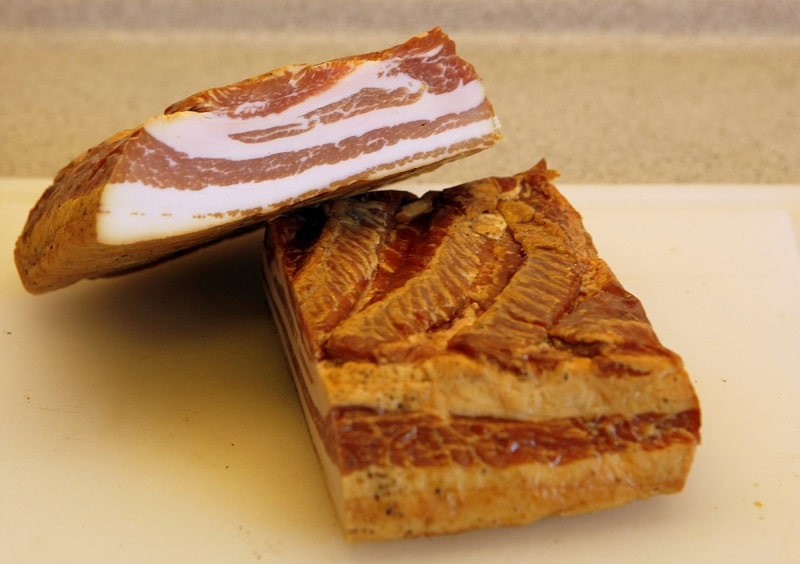

During the production of various charcuterie, brine may be necessary. Here, a good basic brine recipe is a must. Depending on the desired flavor of the meat, different spices and other exciting flavors can be added to the brine.
Salting of meats, sausages, and fish is a technique that has been used for several centuries. It is a recognized method to kill bacteria on the surface of the meat. Salting also draws moisture out of the meat, extending its shelf life.
Salting can be done by dry salting the meat or by soaking it in brine. Dry salting is a quick process that leaves a characteristic salty taste on the meat’s surface. In dry salting, the meat is placed in a container or bowl and sprinkled with salt. The brine method, on the other hand, provides a more even salting throughout the meat. In brining, the meat is immersed in a mixture of salt, water, and possibly spices and sugar.
Here is a good basic recipe for the latter salting method – brine for charcuterie.
Ingredients
• 1 liter of water
• 160 grams of salt
• 25 grams of sugar
• Optional dried spices
Method
1. Mix the brine, and immerse the meat in it.
2. Let the meat soak in the brine for a specific number of hours depending on the type of meat.
- Pork tenderloin should soak for 18 to 24 hours.
- Beef roast, beef inside round, and pork neck roast should soak for 48 hours.
- Pork belly or rib roast should soak for 48 to 72 hours.
3. Rinse the meat thoroughly. You may then choose to desalinate the meat. In desalination, the meat should soak for one hour for each day it has been in the brine. Change the desalination water once an hour.
Tips and tricks
You don’t necessarily have to use regular sugar in the brine; you can also use brown sugar, cane sugar, and the like. Sugar can also be completely omitted.
To give the meat an extra kick, you can add spices and other flavors. Dried spices are the most obvious choice as they are free from soil bacteria. If you prefer fresh herbs in the brine, you should briefly immerse them in boiling water and then rinse with cold water. Other added flavors could be vinegar, syrup, alcohol, or chili sauce.
You can choose to use curing salt in the brine. If you do, replace one-third of the salt with curing salt, equivalent to about 55 grams of curing salt. Curing salt is a useful tool for killing certain types of bacteria in the meat that can be deadly to humans, such as those causing botulism. Botulism can, in rare cases, occur in home-preserved foods. To avoid it, many butchers use curing salt during salting.
There are divided opinions on whether curing salt can be harmful to human health and potentially carcinogenic. However, the discussion is only relevant at larger quantities of curing salt than used in this basic recipe. In Denmark, nitrite is allowed in small amounts. If you prefer not to use curing salt in the brine, you can simply use regular salt, which can still create tasty charcuterie.
Read much more about the topic on my website meatlover.dk.