
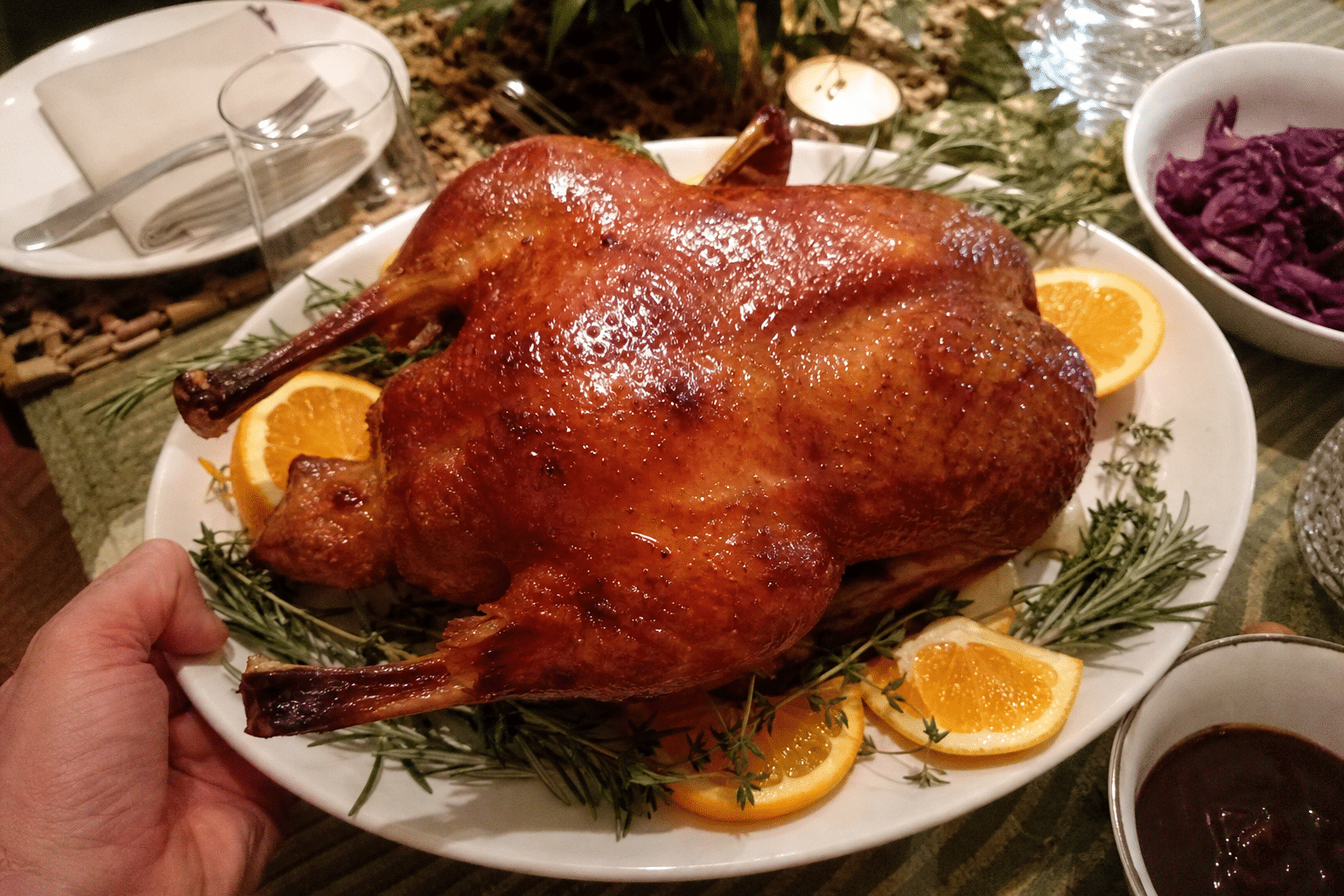

For a smaller Thanksgiving, a whole roast duck beats a turkey hands down. It is richer, more flavorful, and it renders out enough fat to crisp its own skin into shattering crackling. A good duck feels special in a way a modest turkey never quite manages.
The whole game is rendering that fat and drying the skin, which is simpler than it sounds. Here is how I roast it.
Read more: The one-pot chili that tastes like it simmered all day, ready in just 30 minutes
What you need
- 1 whole duck, about 5 to 6 lb (2.3 to 2.7 kg)
- Salt and black pepper
- A halved orange, a few garlic cloves, and herbs for the cavity
- A little honey or orange juice for glazing
- A roasting rack
- A meat thermometer
How I make it
- Prick the skin all over, being careful not to pierce the meat, so the fat can render out.
- Salt the duck well, inside and out, and leave it uncovered in the fridge overnight to dry the skin.
- Tuck the orange, garlic, and herbs into the cavity and set the duck breast-up on a rack.
- Roast at 325°F (165°C), draining off the rendered fat now and then, which is liquid gold for roast potatoes.
- Cook to 165°F (74°C) in the thickest part of the thigh; duck is poultry, so it has to reach that safe mark, and a quick glaze at the end lacquers the skin.
- Rest it for 15 minutes before carving.
How to get it right every time
- Prick the skin. Piercing just the skin lets the thick fat layer render and crisp instead of staying flabby.
- Dry it overnight. An uncovered night in the fridge is the key to truly crackling skin.
- Save the fat. Rendered duck fat makes the best roast potatoes of the year.
- Reach 165°F. Duck is poultry, so cook the thigh to 165°F (74°C) to be safe.