
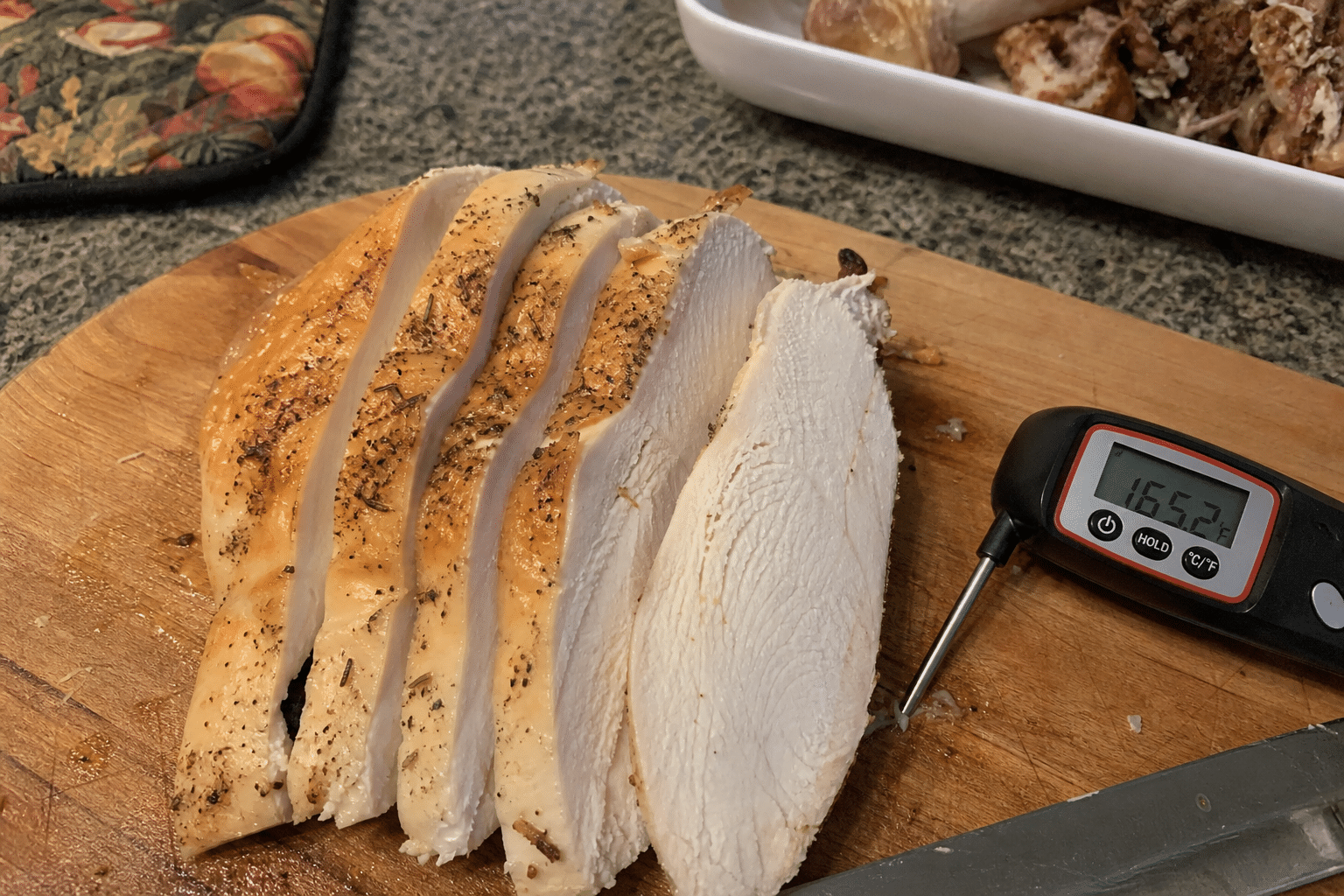

Dry turkey breast is almost a holiday cliche, but it is not the bird’s fault. The single mistake behind it is overcooking, usually because people cook to a time or to the higher temperature the legs need, and the lean breast dries out long before.
White meat is done and safe at a lower point than most people think, and every extra minute past it squeezes out moisture. A thermometer and a little strategy fix it completely. Here is how I avoid the dry-breast trap.
Read more: The best homemade beef chili, thick and deep with a secret ingredient most people skip
What you need
- An instant-read meat thermometer
- Foil for shielding
- Ice, if you want to try the cold-breast trick
- Butter and salt
- A little patience to rest the bird
How I make it
- Cook to temperature, not time. All turkey is safe at 165°F (74°C), and the breast should come out right at that mark.
- Measure in the thickest part of the breast, not touching bone, and pull it the moment it hits 165°F (74°C).
- Remember carryover heat; the temperature keeps climbing a few degrees while it rests, so you can even pull it a touch early.
- If the breast is browning too fast, tent it loosely with foil while the legs catch up.
- To slow the breast on a whole bird, chill just the breast with ice before roasting so it starts colder than the legs.
- Rest the turkey for 15 to 20 minutes before carving so the juices settle.
How to get it right every time
- Use a thermometer. Cooking to 165°F (74°C), not to a clock, is the one habit that saves the breast.
- Account for carryover. The meat keeps cooking as it rests, so pulling it right on the mark, or just before, avoids overshooting.
- Shield the breast. A loose foil tent slows the browning while the dark meat finishes.
- Rest before carving. Cutting too soon spills the juices that keep the breast moist.