
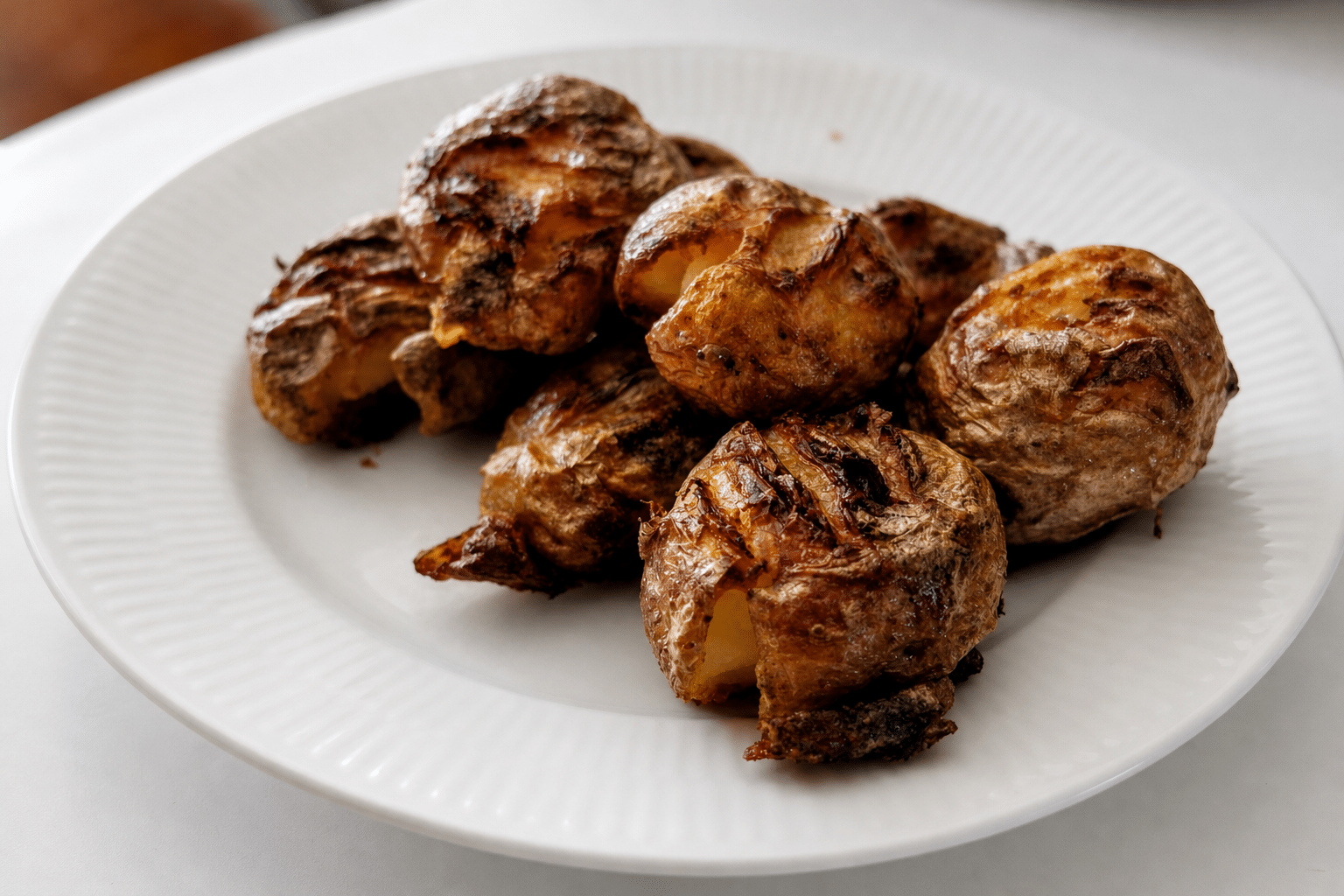

If you have ever scraped the crispy bits off the bottom of a roasting pan and thought, what if the whole potato tasted like this, crushed potatoes are your answer. The idea is almost embarrassingly simple: more surface area means more crunch. By boiling small potatoes first, then pressing them gently before roasting, you create a landscape of jagged edges and cracked surfaces that turn deep golden in the oven. The result is crunchy all over, fluffy in the center, and genuinely hard to stop eating.
This works as a side dish alongside beef or grilled chicken, but honestly it works just as well as a party snack with something good to dip into.
Why uneven surfaces matter
A smooth, round potato has very little surface in contact with the hot pan. Crush it and you create dozens of small edges, ridges, and rough spots. Each of those surfaces can crisp up independently. That is the whole trick. It is not complicated science, it is just geometry.
The other half of the equation is moisture. Moisture is crispiness’s greatest enemy. Any water left clinging to the potato will steam it rather than roast it, and you end up with something soft instead of crunchy. Draining and resting the potatoes on a rack before you crush them gives that steam somewhere to go.
The vinegar step you should not skip
Adding a splash of vinegar to the boiling water is a small detail that makes a real difference. The vinegar firms the outer layer of the potato slightly, which means it holds together during boiling and does not fall apart when you press it. The result is a potato that cracks neatly rather than crumbling into a mess.
You will not taste the vinegar in the finished dish. It does its job during cooking and disappears.
Ingredients
- 2 pounds (about 900 g) small potatoes, such as new potatoes or fingerlings
- Water, enough to cover
- 1 tablespoon white vinegar or apple cider vinegar
- 3-4 tablespoons neutral oil (vegetable or canola), plus more for basting
- Salt and black pepper
Instructions
1. Place the potatoes in a pot and cover with cold water. Add the vinegar. Bring to a boil and cook for about 10 minutes, until the potatoes are tender when pierced with a knife but still holding their shape. They should not be falling apart.
2. Drain the potatoes and spread them in a single layer on a wire rack. Let them sit for 10 minutes, until the surface looks dry and you can see the steam has released. This step is not optional.
3. Preheat your oven to 375°F (180°C) on convection if you have it, conventional if not.
4. Transfer the potatoes to a rimmed baking sheet. Use the bottom of a glass, a wide spatula, or a potato masher to press each one gently until it cracks and flattens slightly. You want cracks and uneven edges, not a pancake. The potatoes should still have some height.
5. Drizzle generously with oil and season well with salt and pepper. Turn each potato to make sure every surface is coated.
Read more: The creamy red curry coconut meatball stew the whole family asks for again
6. Roast for 30 to 45 minutes total. Every 15 minutes, press each potato lightly once more and spoon the hot oil from the pan back over them. That is where the magic happens: the re-basting keeps every surface active and crisping. They are done when deeply golden all over and crunchy to the tap.
7. Serve immediately for maximum crunch.
Topping options
A simple garlic mayo is the classic pairing here, and for good reason. The cool, creamy dip against the hot, crunchy potato is hard to beat. Mix a few cloves of minced or pressed garlic into good mayonnaise, squeeze in a little lemon, and you are done.
Herb butter is another strong option: soften a stick of butter and mix in chopped fresh herbs, a little garlic, and a pinch of salt. Put a small pat on each hot potato straight from the oven.
Read more: Don’t throw it out: 9 kitchen scraps that turn into something better than the original
If you want to keep it simple, flaky sea salt and a few fresh herbs scattered over the top right before serving is completely enough.
Tips
Use small potatoes. New potatoes and fingerlings work best because their size is right for a single portion and their skin crisps up beautifully. Larger potatoes can be halved before boiling, but smaller is better here.
Do not rush the drying. Even five extra minutes on the rack makes a difference. If you skip it, the steam trapped inside the potato turns into moisture in the pan, and you lose the crunch.
Convection makes a difference. If your oven has a convection or fan-assisted setting, use it. The moving air pulls moisture away and speeds up browning.
Scale freely. This recipe works for any quantity. The ratios do not need to be precise. Use enough oil to coat generously and enough vinegar to notice it in the water.