
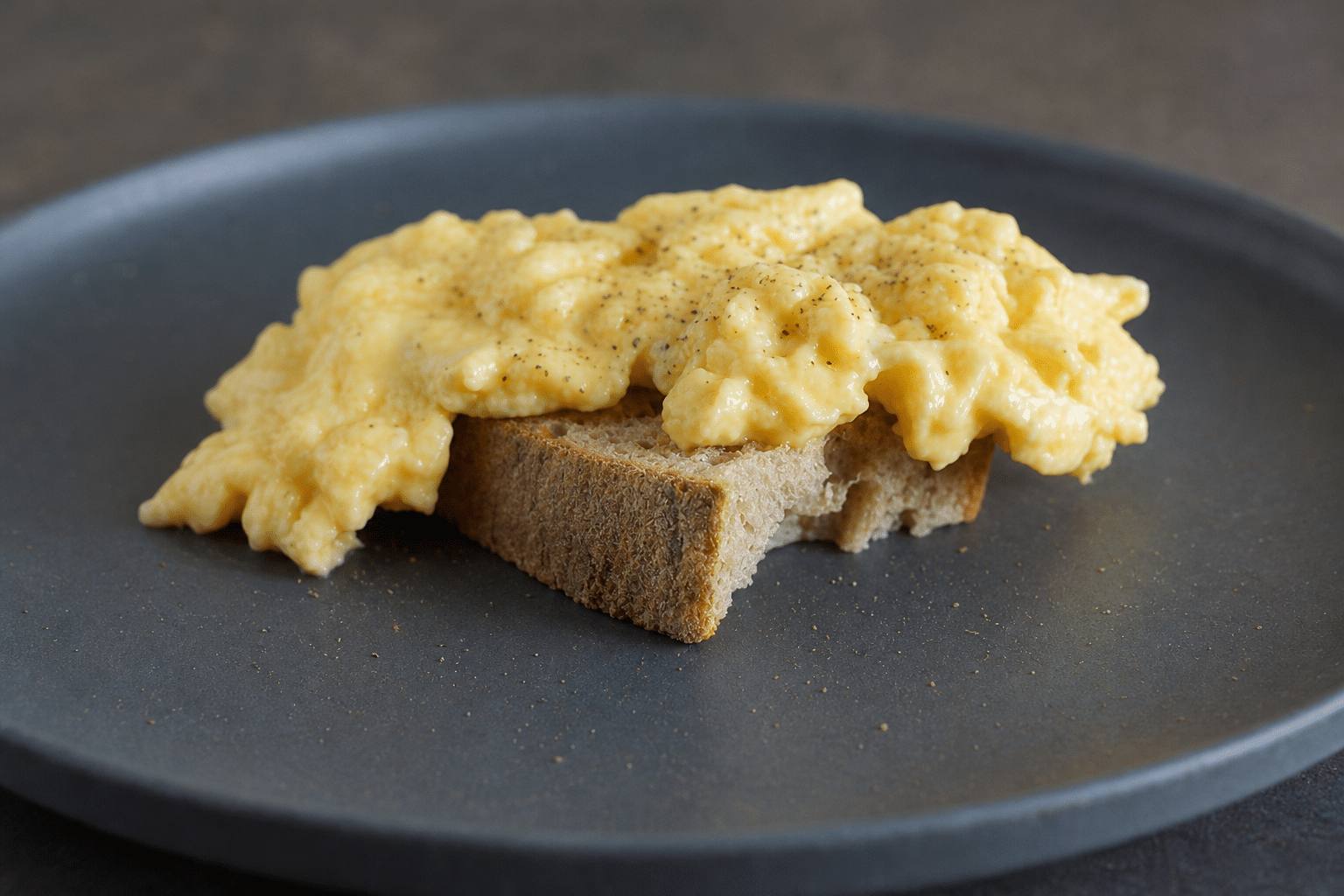

Most scrambled eggs get cooked too long. You wait for all the wetness to disappear, and by that point the eggs are dense and dry.
Jamie Oliver’s method works in the opposite direction: pull the pan from the heat while the eggs still look underdone, and let the warmth already in them finish the job.
The ingredient list is deliberately short – eggs, salt, and butter. No milk, no cream, nothing else. The technique is what makes the difference.
Jamie Oliver does it the American way
Jamie Oliver is one of the world’s most celebrated chefs, and the scrambled eggs he makes follow the American diner tradition. That means they come out soft, loosely set, and genuinely creamy – quite different from the firmer, fully-cooked scrambled eggs many people grew up eating at home.
The American-style egg is much softer, wetter, and creamier than the firm version that’s common in a lot of home kitchens. If you’re used to the firmer kind, the first time you make these you might think you’ve taken them off the heat too early.
Read more: The 12 best hot chicken spots in Nashville
You haven’t. This is intentional, and it’s the whole point.
Pull the pan off the heat early
Whisk your eggs with a pinch of salt before they touch the pan. Set a skillet over medium heat with a pat of butter. When the butter foams, pour in the eggs and turn the heat down slightly.
As the eggs start to set at the edges, use a spatula to gently push them toward the center of the pan. Work around the edge, folding the cooked curds inward and letting the still-liquid egg flow outward to meet the heat.
Keep the motion slow and deliberate – this isn’t aggressive stirring, it’s a gentle fold.
The key moment: when about two-thirds of the eggs have set while the remaining third is still wet and glossy, pull the pan off the burner. That’s earlier than your instincts will tell you.
The eggs are still hot when they leave the pan, and they’ll carry on cooking from their own residual heat. That carry-over cooking finishes the job.
By the time the eggs reach the plate they’ll be just set – soft and creamy, with the curds loosely holding together and no rubbery texture anywhere.
If you are pregnant, elderly, immunocompromised, or cooking for young children, the USDA recommends cooking eggs until no liquid remains and they reach 160°F (71°C).
Serve on toast right away
Whether you prefer this soft, creamy American style or the firmer scrambled egg is entirely a matter of taste. But the technique is worth trying at least once to find out which side you’re on.
Serve immediately on toasted bread while everything is still warm. Eggs this soft don’t sit well – they carry on cooking from their own heat and tighten up fast. Toast your bread before you crack the eggs so both are ready at the same moment.