
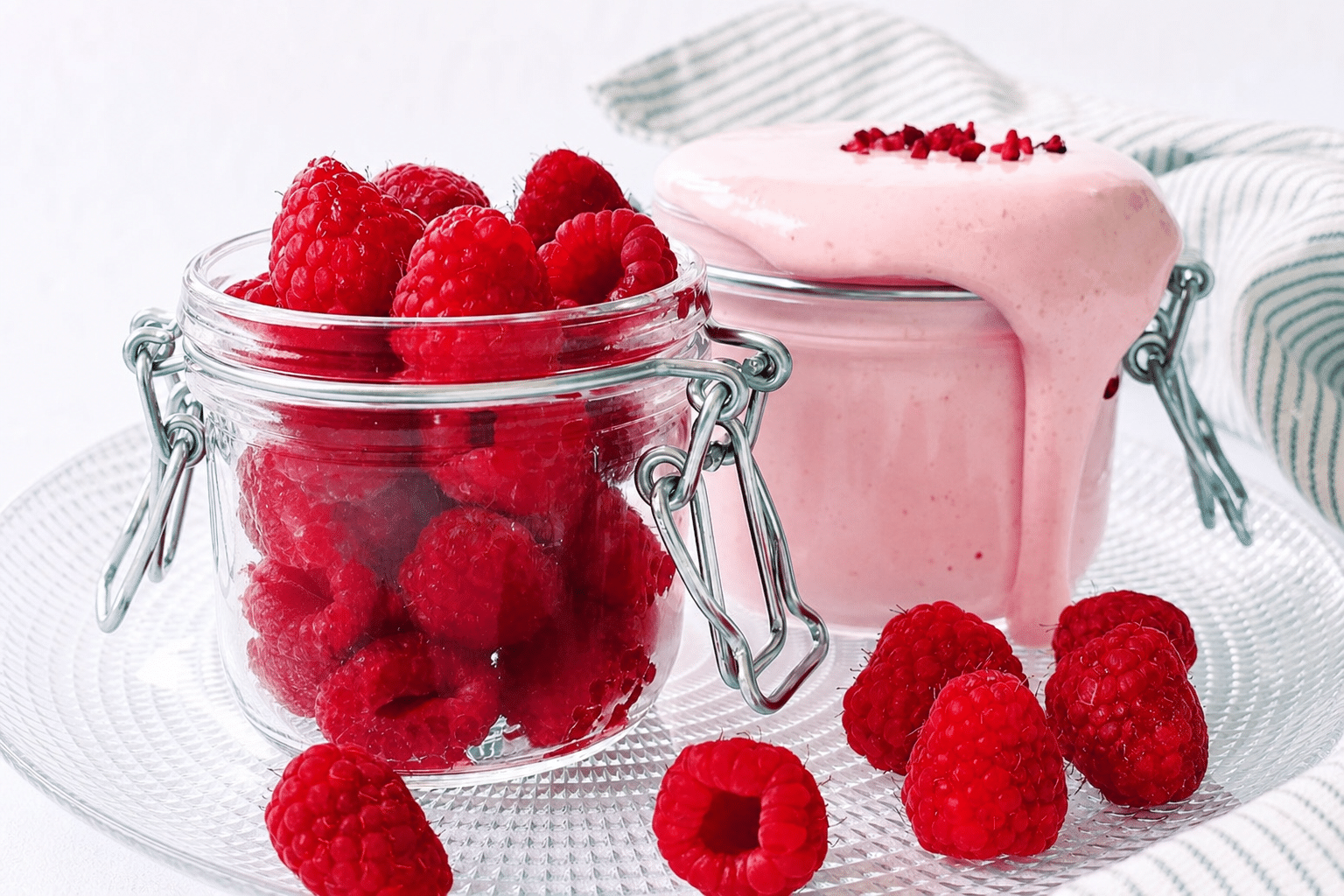

In Denmark, this sweet cloud is called “guf,” and it is the classic summer topping for ice cream and koldskaal, a chilled buttermilk dessert that Danes make all through the warm months. But honestly, it goes on everything. Spoon it onto hot chocolate, spread it between cake layers, or just eat it straight from the bowl. No one is judging.
The real draw is the technique. This is not a raw egg white meringue, and it is not a gelatin-based version from a jar. It is an Italian meringue: you cook a small amount of sugar syrup to 248°F (120°C) and pour it, boiling hot, into beaten egg whites while the mixer runs. That cooked syrup stabilizes the whites completely, producing a marshmallow cream that is glossier, fluffier, and more structurally sound than anything you can buy. It holds its peaks for hours without weeping or collapsing. The taste of summer and sunshine, as we like to say.
Why this technique works
Most gelatin-based marshmallow cream recipes require a little patience and some advance planning to let the gelatin set. This one is ready in ten minutes and needs nothing but eggs, sugar, and water.
The science is simple. When you pour 248°F sugar syrup into the whipped whites, the heat partially sets the egg proteins and dissolves the sugar evenly throughout the foam. Keep beating as it cools and the mixture turns white, thick, and glossy. That is Italian meringue. The structure it builds is what makes this guf hold up on a scoop of ice cream far better than a spoonful from a jar.
Read more: How to boil eggs perfectly every time: exact timings for soft, jammy, and hard
Using pasteurized liquid egg whites (sold in a small carton next to regular eggs at any grocery store) means zero food safety concerns and no shells to separate.
Ingredients
Base (makes enough for 4 servings)
- 1.75 oz (50 g) pasteurized liquid egg whites (from a carton)
- 6 tablespoons (75 g) granulated sugar
- 1 tablespoon + 2 teaspoons (25 ml) water
Raspberry version (choose one flavor per batch)
- 2 tablespoons raspberry jam, or crushed freeze-dried raspberries
- 2-3 drops red food coloring (optional)
Strawberry version
- 2 tablespoons strawberry jam, or crushed freeze-dried strawberries
- 3-4 drops red food coloring (optional)
Licorice version
- 1-2 tablespoons licorice powder
Instructions
- Pour the pasteurized egg whites into the bowl of a stand mixer fitted with the whisk attachment, or a large bowl if using a hand mixer. Beat on high speed until stiff peaks form, about 2-3 minutes.
- While the whites are beating, combine the sugar and water in a small heavy saucepan over medium-high heat. Stir until the sugar dissolves, then stop stirring and let the syrup cook until a candy thermometer reads 248°F (120°C).
- With the mixer still running on high, pour the hot syrup in a slow, thin, steady stream down the inside wall of the bowl. Do not pour it onto the whisk or it will spray everywhere.
- Keep beating on high speed until the guf is completely white, thick, and glossy, and the bowl no longer feels warm to the touch, about 5-8 minutes.
- Fold in your chosen flavoring: jam or crushed freeze-dried fruit (and a few drops of food coloring if you want that pink swirl), or licorice powder. You do not need to blend it perfectly; a streaky, swirled look is part of the appeal.
- Serve immediately over scoops of ice cream, spread it on a layer cake, cloud it onto hot chocolate, or use it as described below with koldskaal.
The koldskaal connection
This is where guf comes from, and it is worth knowing about. Koldskaal is a cold, lightly sweet Danish dessert made from buttermilk and egg yolks, served in a bowl like a cold soup with small crispy butter cookies floating in it. Add a generous spoonful of raspberry or strawberry guf on top and you have one of the genuinely great combinations in Scandinavian home cooking. It is tangy, creamy, cold, and sweet all at once. I find it absolutely classy, and I say that as someone who also eats the guf directly off the spoon.
Read more: Bibimbap from scratch: the Korean rice bowl with seasoned meat, vegetables, and a fried egg
Tips and variations
Jam vs. freeze-dried fruit: Freeze-dried raspberries or strawberries give a more intense, brighter flavor and keep the guf slightly firmer. Jam folds in beautifully and tastes sweeter and more jammy. Both are delicious; it comes down to what you have on hand.
Food coloring: Completely optional. Without it, the guf is white. A few drops make it look pink and playful, which kids love on ice cream.
Read more: Asian beef salad with seared ribeye, crispy cabbage, and a sesame-lime dressing, ready in 30 minutes
Use a thermometer: The syrup temperature is what makes or breaks this recipe. At 248°F the syrup is at the right stage to stabilize the whites. A simple instant-read or candy thermometer removes all guesswork.
Storage: Guf is best the day it is made, but it holds its shape at room temperature for several hours. Cover and refrigerate leftovers, then re-whip briefly with a hand mixer before serving if it has softened.
Scaling: The recipe doubles easily for a larger batch to frost a full cake.