
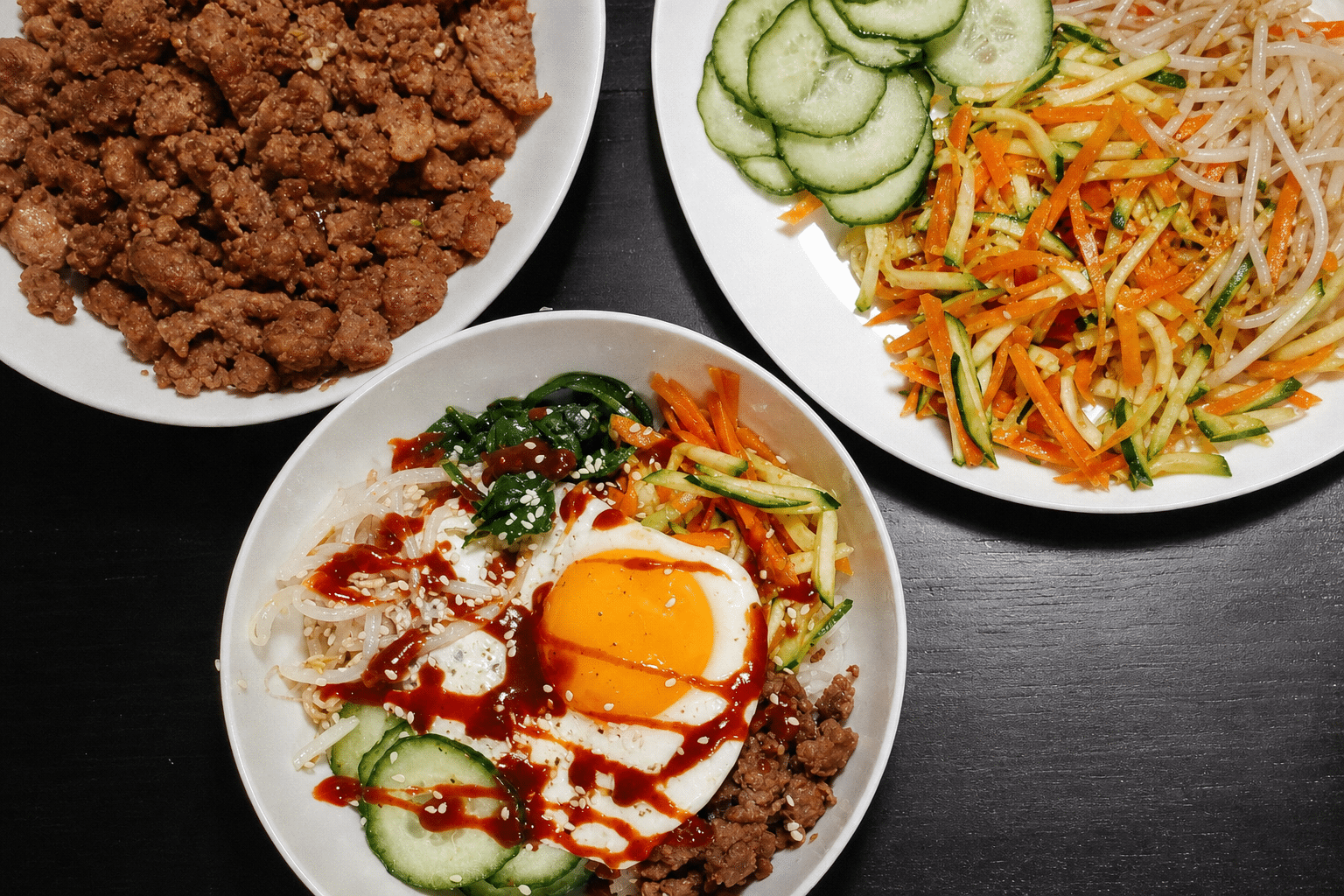

Bibimbap is Korean for “mixed rice,” and that tells you exactly what to do. A bowl of jasmine rice arrives at the table loaded with marinated ground meat, four separately seasoned vegetables, and a fried egg in the center. You add a spoonful of gochujang sauce, break the yolk, and stir everything together so the egg and sauce coat every grain of rice.
I use a mix of ground veal and pork here. The marinade is simple: soy sauce, sesame oil, sugar, garlic, fresh ginger, and a spoonful of gochujang. After fifteen minutes resting in that mix, the meat takes only three or four minutes in the pan.
The whole thing is ready in about 45 minutes, and most of that is just parallel prep while the meat marinates.
Why this recipe works
The key to bibimbap is treating each topping as its own thing. The spinach gets a quick blanch and a splash of soy sauce. The bean sprouts get a brief pour of boiling water and a toss with scallion, sesame oil, and sesame seeds. The carrot and zucchini get julienned and quickly sautéed. Everything keeps its own flavor and texture until you decide to mix it.
The gochujang sauce is what pulls the bowl together. A small amount goes into the meat marinade, and the rest comes on the side. If you haven’t cooked with gochujang before: it’s a fermented Korean chili paste, earthy and mildly sweet alongside the heat. You’ll find it in the Asian foods aisle at most large grocery stores.
Ingredients
Serves 4
Marinated meat:
- 1 lb 2 oz (500g) ground veal and pork, or ground pork
- 3 tablespoons (50g) soy sauce
- 1½ tablespoons (20g) sesame oil
- 4 teaspoons (20g) sugar
- 2 garlic cloves, minced
- 1-inch (3cm) piece fresh ginger, grated
- 2 teaspoons (10g) gochujang
Spinach:
- 7 oz (200g) fresh spinach
- 1 tablespoon (15g) soy sauce
Carrot and zucchini:
- 2 medium carrots, about 7 oz (200g) total, peeled
- 1 small zucchini, about 7 oz (200g), trimmed
- 2 teaspoons (10g) canola oil
- 1 teaspoon (5g) sesame oil
Bean sprouts:
- 7 oz (200g) bean sprouts (about 2 cups)
- 1 scallion, thinly sliced
- 1 teaspoon (5g) sesame oil
- 1 tablespoon (10g) sesame seeds, plus more to serve
Cucumber:
- Half a large cucumber, about 7 oz (200g), thinly sliced
Gochujang sauce:
- 2 teaspoons (10g) gochujang
- 2 teaspoons (10g) soy sauce
- 2 teaspoons (10g) sesame oil
- 2 teaspoons (10g) sugar
- 2 teaspoons (10g) water
- 1 teaspoon (5g) rice vinegar
Jasmine rice:
- 1⅔ cups (300g) jasmine rice
- About 1¾ cups (450ml) water
Fried eggs:
- 4 eggs
- 2 teaspoons (10g) canola oil
- Salt and pepper
Instructions
1. Cook the rice. Rinse the jasmine rice until the water runs clear. Combine with the water in a saucepan and bring to a boil over medium-high heat. Reduce to the lowest setting, cover tightly, and cook for 12 minutes. Remove from heat and let it steam, still covered, for 5 more minutes.
Read more: Asian beef salad with seared ribeye, crispy cabbage, and a sesame-lime dressing, ready in 30 minutes
2. Marinate the meat. Mince the garlic and grate the ginger. In a bowl, stir together the soy sauce, sesame oil, sugar, garlic, ginger, and gochujang. Add the ground meat and mix well. Let it rest for 15 minutes.
3. Blanch the spinach. Bring a pot of water to a boil. Add the spinach and blanch for 1 minute, then drain thoroughly. Season with the tablespoon of soy sauce and set aside.
4. Cook the carrot and zucchini. Cut both into thin julienne strips (matchstick-sized). Heat the canola oil in a skillet over medium heat, add the strips, and sauté for 2 to 3 minutes until just tender. Remove from the heat and toss with the teaspoon of sesame oil.
5. Prep the bean sprouts. Set the sprouts in a colander and pour boiling water over them. Let sit for 30 seconds, then drain well. Toss with the sliced scallion, sesame oil, and sesame seeds.
6. Slice the cucumber thinly and set aside.
Read more: How to make hummus as smooth as a restaurant’s, with one cold-water blending trick
7. Make the sauce. Stir all the gochujang sauce ingredients together in a small bowl until the sugar dissolves.
8. Cook the meat. Heat a skillet over medium-high heat. Add the marinated ground meat and cook for 3 to 4 minutes, breaking it apart as it goes, until there is no pink remaining inside. Ground meat is safe to eat once it reaches an internal temperature of 160°F (71°C).
9. Fry the eggs. Heat the canola oil in a nonstick skillet over medium heat. Crack in the eggs, season with salt and pepper, and fry until the whites are set and the yolks are still runny.
10. Assemble. Divide the rice among four bowls. Arrange the meat, spinach, carrot and zucchini, bean sprouts, and cucumber in separate sections on top of the rice. Place a fried egg in the center of each bowl. Scatter over some extra sesame seeds and serve with the gochujang sauce on the side.
Read more: Classic Buffalo wings with crispy skin and the original Frank’s RedHot butter sauce
11. Mix before eating. Break the yolk and stir everything into the rice so each bite picks up a little of everything. That is the whole point of bibimbap.
Tips and variations
Can’t find ground veal? Ground pork on its own works great, or use a half-and-half mix of ground beef and pork. All-beef makes the bowl richer; all-pork keeps it lighter.
Adjust the heat. Gochujang varies in intensity by brand. If you’re sensitive to spice, start with half the amount in the sauce and taste before adding more.
Make it vegetarian. Swap the meat for crumbled firm tofu pressed dry so it crisps in the pan. The same marinade works perfectly.
Storing leftovers. The meat and rice keep in the fridge for up to 3 days. Store each vegetable component separately so the textures stay distinct. The gochujang sauce keeps in a small jar in the fridge for up to a week.