
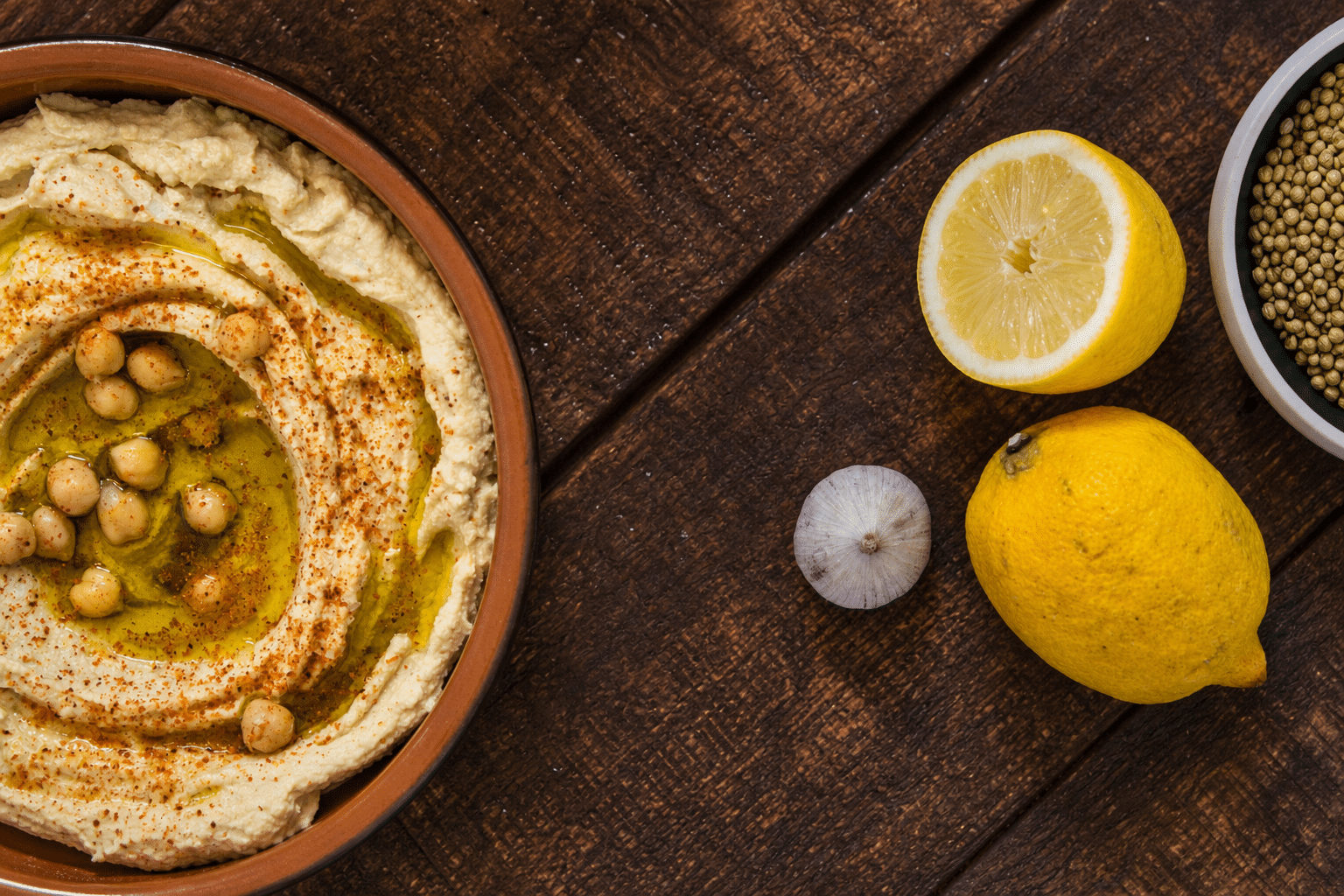

Most homemade hummus is thicker and grainier than what you get at a restaurant. I used to think it was a question of equipment. It is not. It comes down to two techniques that almost no recipe bothers to explain: blending the tahini with lemon juice before the chickpeas go in, and streaming in ice-cold water while the machine runs.
Do both of those things, and the texture problem disappears.
Why this recipe works
Blend the tahini first. Add the tahini and lemon juice to the food processor and run it for a full minute before anything else goes in. The mixture turns pale, aerated, and almost mousse-like. That whipped base is what gives finished hummus its lightness – something you simply cannot achieve by adding tahini after the chickpeas are already in the bowl.
Use ice-cold water. Adding ice water gradually while the processor runs is the most underrated step in hummus. It keeps the fat in the tahini from separating and encourages the whole mixture to emulsify into something genuinely silky. If yours has always come out grainy, this is the fix.
Cook with baking soda. A teaspoon of baking soda in the cooking water raises the pH, which breaks down the chickpeas’ cell walls more completely. The result is softer chickpeas that blend far more smoothly – and the cooking time drops by 25 to 45 minutes.
Read more: Classic Buffalo wings with crispy skin and the original Frank’s RedHot butter sauce
A dish with deep regional roots
Hummus has been part of the cooking of Lebanon, Jordan, Palestine, and the broader Eastern Mediterranean for centuries – documented chickpea-and-tahini preparations trace back to 13th-century Egypt and Syria. Each country has its own version today. The Lebanese style is mild and creamy, topped with whole chickpeas, fresh parsley, and paprika, which is the version this recipe follows. Jordanian hummus leans into cumin and coriander for a more aromatic character. Palestinian hummus is typically thicker, more garlicky, and finished with sumac. Some Israeli versions are served warm alongside ful, the slow-cooked fava bean dish, or shakshuka.
Ingredients
Serves 4
- 1 1/4 cups (250 g) dried chickpeas, or 3 cups (500 g) cooked and drained
- 6 tablespoons (100 g) tahini (light, hulled tahini gives the smoothest result)
- 3 tablespoons (50 g) fresh lemon juice (about 1 to 2 lemons)
- 1 garlic clove
- 1 teaspoon (5 g) salt, plus more to taste
- 1 teaspoon (3 g) ground cumin
- 1/4 teaspoon (1 g) ground coriander
- 1/4 to 1/3 cup (60 to 80 g) ice-cold water
- 1 teaspoon baking soda for cooking (optional, but recommended)
To serve:
- 2 tablespoons (30 g) olive oil
- 20 to 30 whole cooked chickpeas (reserved from cooking)
- Paprika
- Fresh parsley
Instructions
1. Sort through the dried chickpeas, then soak in generously salted water for 10 to 12 hours.
2. Drain and rinse thoroughly. Transfer to a pot with fresh water, bring to a boil, then reduce to a steady simmer. Stir in 1 teaspoon of baking soda if using. Cook until the chickpeas are completely tender – about 60 to 75 minutes without baking soda, or 30 to 35 minutes with it. Start checking for doneness a few minutes before the lower end of the range: a chickpea should crush effortlessly between your fingers.
3. Before draining, scoop out 20 to 30 whole chickpeas and set them aside for the topping. Drain the rest and let them cool slightly.
Read more: Pad kra pao at home: the Thai street food pork with holy basil that is ready in 15 minutes
4. Put the tahini and lemon juice in a food processor. Blend for a full minute until the mixture is pale and visibly airy. This step is not optional – it is the foundation of the smooth texture.
5. Add the garlic, salt, cumin, coriander, and cooked chickpeas. Blend again. Then, with the machine still running, pour in the ice-cold water gradually. Keep blending until everything is completely smooth and silky, 1 to 2 minutes more.
6. Taste and adjust: more lemon for brightness, more salt if it tastes flat. The hummus should be just barely pourable at this point – it firms up as it cools.
7. Spread onto a wide plate or shallow bowl, make a shallow well in the center, and drizzle with olive oil. Top with the reserved whole chickpeas, a pinch of paprika, and a few sprigs of fresh parsley.
Read more: 30-minute beef pho: the spiced broth shortcut that skips the 8-hour simmer
Tips and variations
Dried vs. canned chickpeas. Dried chickpeas soaked and cooked from scratch give noticeably better texture and flavor. Canned work in a pinch – rinse them well, skip steps 1 through 3, and use about 3 cups drained – but the finished hummus will be thicker and less smooth.
Light tahini. Tahini made from hulled sesame seeds, often labeled “light tahini,” is milder and blends more smoothly than the darker, unhulled kind. Either will work, but light gives the creamiest result.
If it still comes out grainy. Two causes cover almost every case: the chickpeas were not cooked soft enough, or the cold water was added before the machine was running. The chickpeas need to be very soft before they go in, and the water has to be poured in while the blender is already going.
Storage. Keep leftover hummus in a sealed container in the fridge for 3 to 4 days. It genuinely tastes better on day two once the flavors have had time to settle. Bring it back to room temperature before serving and add a fresh drizzle of olive oil.