
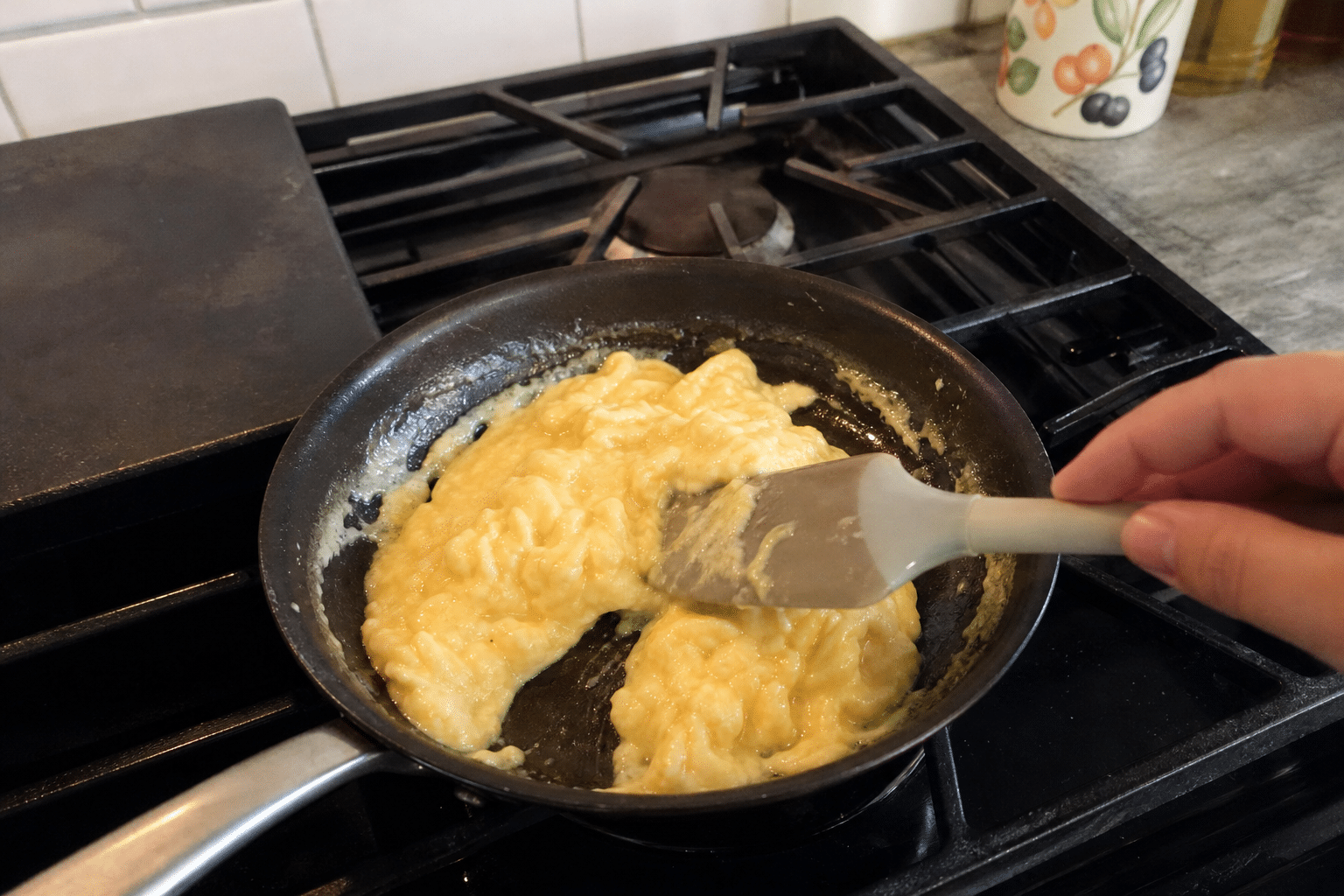

Egg proteins set in a narrow temperature window. Heat them gently to the right point and they form a soft, moist curd. Push past it, and the protein web tightens, squeezes out moisture, and you end up with the bouncy result most people know too well.
The fix is not complicated. Two changes handle it completely.
What goes wrong inside the pan
When eggs are beaten and heated, the proteins unfold and link together into a three-dimensional web. Done right, that web traps moisture and produces a tender, creamy texture.
The window is small. According to Food Science Fridays, beaten eggs coagulate at around 156°F (69°C). Keep heating past that, and the protein web tightens, reducing water retention and leaving rubbery whites and a chalky yolk.
Read more: Tartiflette: the French alpine potato and cheese bake for cold nights
Egg whites, before beating, start to coagulate even earlier, around 140°F (60°C). Beating raises the threshold slightly but still leaves very little margin for error on a hot burner.
Fix 1: Add a small splash of liquid
Adding approximately 1 tablespoon or less of milk, water, or cream per egg raises the coagulation temperature from around 156°F (69°C) to roughly 175°F (79°C), according to Food Science Fridays. That gap is what separates tender curds from rubber.
Any liquid works. Whole milk and heavy cream add richness; plain water keeps the flavor clean. The liquid also creates a small amount of steam during cooking, which keeps the curds lighter and more open in texture.
Fix 2: Pull the pan off heat too early
This is the fix most people resist because it feels wrong. Remove the pan from the burner while the eggs still look slightly underdone, with glossy, wet patches showing. Residual heat in the pan and in the eggs themselves will carry them the rest of the way.
Read more: These date-and-almond bars taste exactly like a Snickers and have no added sugar
A hot pan does not stop cooking the moment the burner goes off. By the time scrambled eggs look fully set on the stove, they are usually already past the ideal temperature. Getting them off the heat early is not a mistake; it is the technique.
Keep the heat low from the start
Low to medium-low heat is the baseline. High heat pushes the eggs through the ideal temperature range too quickly to manage.
Stir frequently and watch for the first soft curds to form. When they appear, you have seconds, not minutes. Remove the pan, stir once more, and serve immediately.