
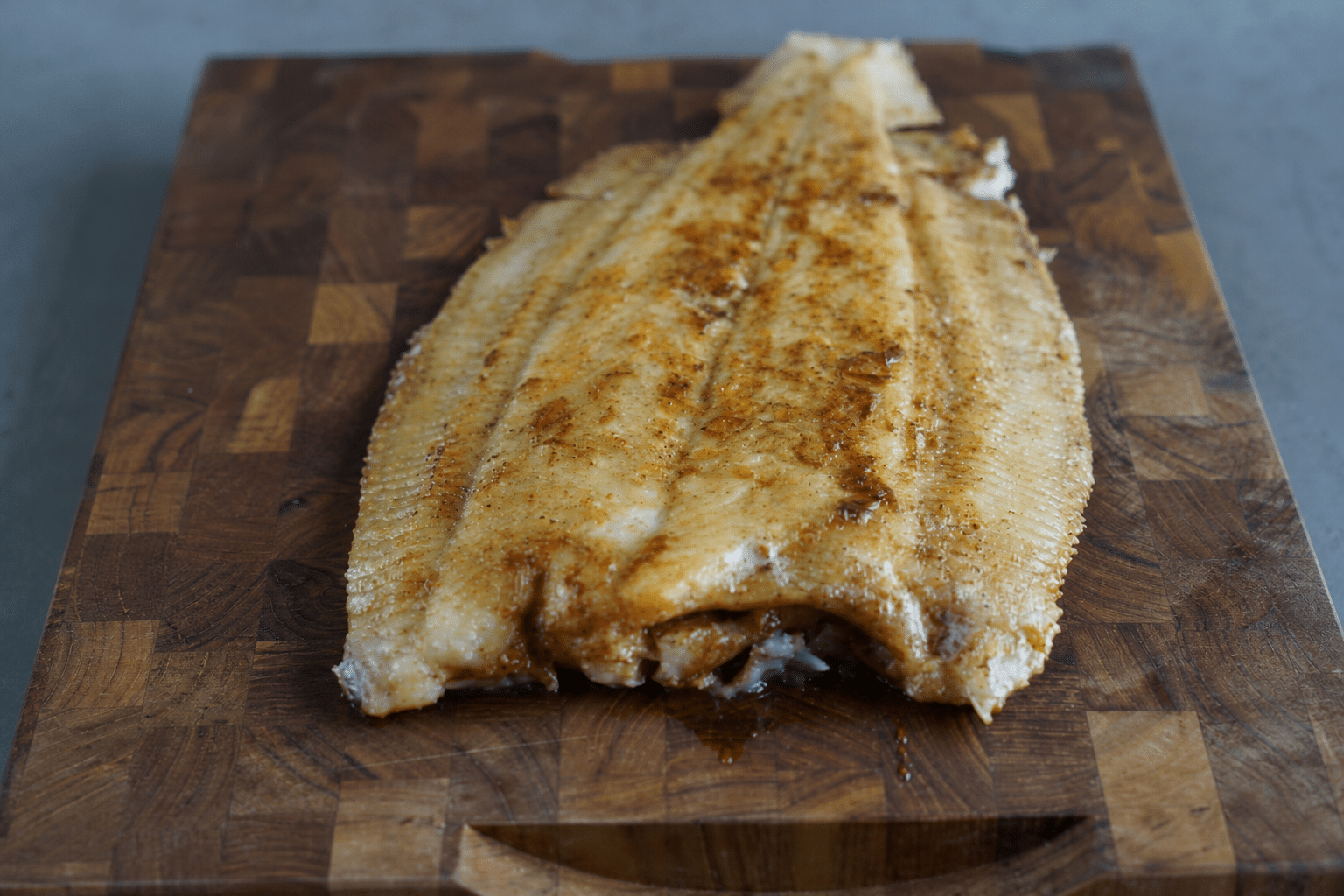

French cooking has a reputation for being complicated. It doesn’t always earn it. I first came across the meuniere technique while learning to fillet whole flatfish from a chef who had one very strong opinion: for a good piece of flatfish, flour, butter, and lemon were quite simply the only right approach. Full stop.
He wasn’t entirely wrong. The result – a thin golden crust, juicy flesh inside, and a clean hit of lemon at the end – is so satisfying that meuniere has become one of the truly classic ways to serve fish in French cuisine. And the whole thing takes about six minutes.
Where the name comes from
Meuniere is French for the miller’s wife. The idea is that millers’ wives worked around flour all day, had it in abundance, and would naturally coat things in it before frying. The technique is exactly that: a light dusting of flour on the fish, a generous pan of butter, and a squeeze of fresh lemon juice at the finish.
That flour is not a breading. There should only be a thin layer around the fish – enough to help the butter grab the surface and build a golden crust, not enough to register as a coating when you eat it.
Salt the fish before you flour it
Before the fish meets the flour, I always use a trick I come back to constantly. Because fish that gets floured or breaded before hitting the pan struggles to absorb salt the way it should, I salt it on its own first – a quick dry brine.
Take the fish out of the fridge about 10 minutes before you plan to cook it. Cover both sides generously with coarse salt and let it sit for 5 to 10 minutes. Then rinse it thoroughly under cold running water and pat it completely dry with paper towels or a clean kitchen towel. A wet fish is not a good start if you want a proper crust.
Read more: The moist yogurt cake with orange and coconut, no butter, no stand mixer
Once dry, lay it on a plate of all-purpose flour and coat both sides evenly. Shake off anything that doesn’t stick.
Butter, foam, and patience
Use butter. Not margarine, not cooking spray. The butter is half of what makes meuniere what it is.
Add a generous knob to the skillet and wait until it foams before you place the fish in. Push the fillet gently away from you as it goes in – hot butter spatters, and you do not want it toward you. Then leave the fish alone.
It needs about three minutes per side. The temptation is to check it and move it, but it is worth letting the fish take care of itself long enough for the flour and butter to actually build that surface. If you rush it, it sticks. If you wait, it lifts cleanly.
Read more: Bright lemon and broccoli pasta with parmesan: the weeknight dinner ready in about 50 minutes
Take it off the heat, transfer to a cutting board, and let it rest for one to two minutes before you add the lemon juice. It is almost provokingly simple compared to how good the result can be.
Full recipe: meuniere-fried flatfish
Serves: 2 Prep time: 10 minutes Cook time: 6 minutes
Ingredients
- 1 whole flatfish or 2 large fillets (sole or flounder are ideal; tilapia works well too)
- Coarse salt
- All-purpose flour
- Butter (a generous amount, for frying)
- Fresh lemon juice
Instructions
- Remove the fish from the fridge about 10 minutes before cooking. Cover both sides with coarse salt and let rest for 5 to 10 minutes.
- Rinse the salt off thoroughly under cold running water.
- Pat the fish completely dry on both sides with paper towels or a clean kitchen towel.
- Spread all-purpose flour on a large plate. Coat the fish on both sides and shake off the excess.
- Melt a generous amount of butter in a skillet over medium-high heat. Wait until it foams.
- Lay the fish carefully in the pan, pressing it gently away from you as you set it down. Cook for about 3 minutes without moving it.
- Flip carefully and cook another 3 minutes on the second side. The fish is done when the flesh is completely opaque and flakes easily with a fork – the USDA puts the safe minimum internal temperature for fish at 145°F (62.8°C).
- Transfer to a cutting board and rest for 1 to 2 minutes.
- Squeeze fresh lemon juice over the fish and serve immediately.
Tips and variations
Which fish to use: The original recipe calls for a Nordic flatfish closely related to European plaice. The nearest thing at a US fish counter is flounder or sole – both are thin, mild, and cook quickly. Tilapia is an easy substitute and available almost everywhere.
Whole fish versus fillets: The original uses a whole flatfish. If you use fillets, check them after 2 minutes per side, as they will cook faster.
Read more: The crispy beef spring rolls Danes eat from street food stands, and how to make them at home
Keep the flour coat thin: Press lightly and shake off what doesn’t cling. A thick coat turns mealy; a thin one turns golden.
Use real butter: Clarified butter is a solid option if you want slightly more heat tolerance without losing the flavor that defines the dish. What you do not want is margarine.
Frequently asked questions
What does meuniere mean? It is French for the miller’s wife – a reference to the flour that millers’ wives always had on hand and would use to coat fish before frying it in butter.
Which fish work for this method? The technique suits flatfish best: sole, flounder, plaice, and tilapia all work well. Thinner fillets are ideal because the cooking time is short and the fish stays moist.
Why flour the fish at all? The thin flour layer helps the fish develop a golden crust in the hot butter and gives the characteristic surface associated with meuniere. Without it, the surface stays pale and the fish can stick. The flour is a crust-builder, not a coating.