
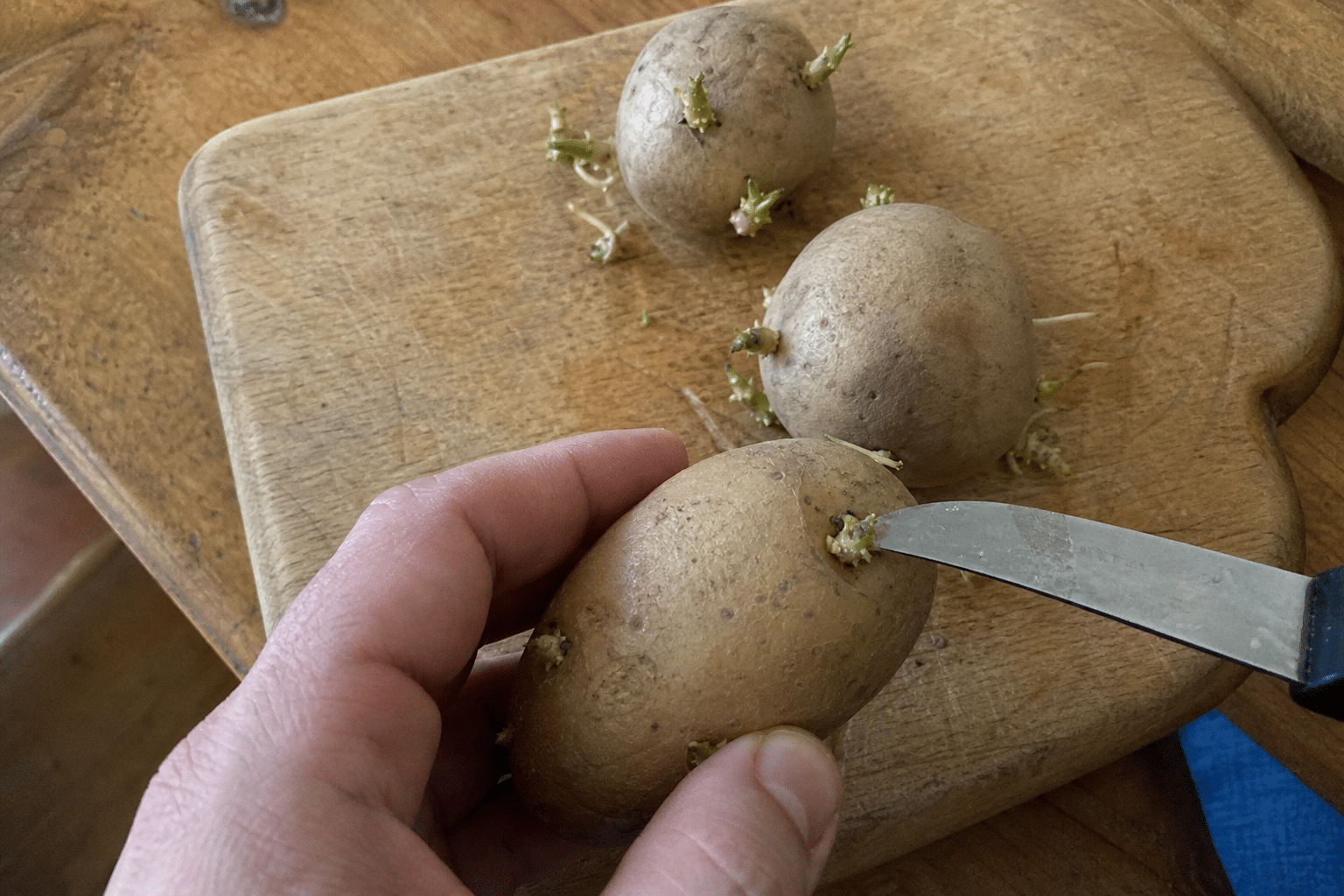

Potatoes sprout faster than most people expect, especially in fall and winter when bags sit untouched in a warm pantry for weeks. The question of whether a sprouted potato is still edible has a specific, testable answer, and the toxicology behind it is worth knowing, because the safety rule most people assume (just cook it thoroughly) turns out to be wrong.
Solanine and chaconine: the two toxins in every potato
All potatoes naturally contain two glycoalkaloids, solanine and chaconine. According to the National Capital Poison Center, fresh potatoes that have not sprouted or turned green hold these compounds at levels low enough to be safe.
The trouble starts when potatoes are exposed to warmth, light, or damage. Those conditions drive glycoalkaloid levels upward, and the toxins concentrate in predictable places: the sprouts, the eyes, the flowers, and any skin that has turned green. The white inner flesh carries the lowest levels by far.
Read more: The best gingerbread cookies for cutting and decorating, with a dough that holds its shape perfectly
Cooking does not solve the problem
This is the fact most people get wrong. The National Capital Poison Center is direct: “Cooking potatoes by baking, boiling, frying, and microwaving does not eliminate glycoalkaloids.” Solanine and chaconine are heat-stable. A potato carrying unsafe toxin levels going into the oven comes out with the same levels.
Peeling does help, since glycoalkaloids concentrate near the skin, removing it before cooking reduces the total load. But peeling cannot rescue a potato that has already gone soft, extensively sprouted, or green, as the toxins penetrate deeper in those cases.
Read more: The turkey-shaped charcuterie board taking over TikTok this Thanksgiving
The trim-or-toss decision
Trim and use, only if all four conditions are met:
- The potato is still firm throughout, with no soft spots
- Sprouting is limited to a few small, shallow sprouts
- There is no green tinge anywhere on the skin or the flesh beneath it
- You cut out every sprout and eye with a generous margin, then peel the entire potato deeply
Discard the entire potato if any of these apply:
- It is soft, shriveled, or mushy anywhere
- Any part of the skin or underlying flesh has turned green
- Sprouting is extensive, long shoots or sprouts covering much of the surface
MSU Extension advises peeling the green parts and “eyes” off a potato before cooking, but that guidance covers isolated damage only. A potato with widespread greening or softening has accumulated toxins throughout the flesh, and trimming cannot bring it to a safe level.
Read more: Skip the salmon: 7 underrated fish that cost less and taste better
Symptoms of glycoalkaloid poisoning
If a potato with elevated glycoalkaloid levels is eaten, symptoms typically appear within a few hours, though onset can be delayed up to a day. The National Capital Poison Center lists vomiting, abdominal pain, diarrhea, headache, flushing, confusion, and fever.
Storage that slows sprouting
Glycoalkaloid production accelerates with warmth and light. MSU Extension recommends a cool, dark storage spot in an opaque bag, burlap or brown paper rather than plastic or netted bags, to slow the process.