
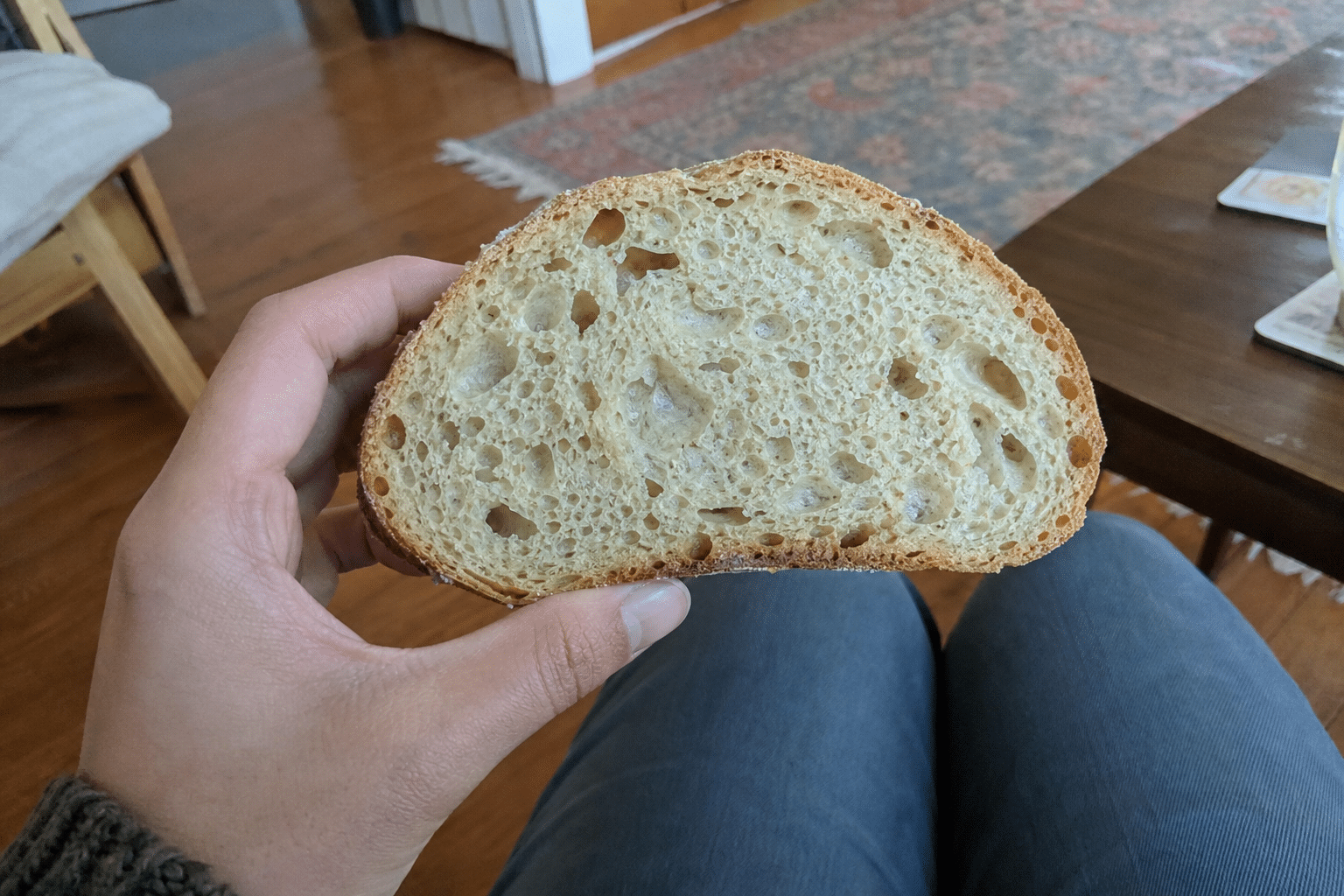

Sourdough has taken over the health-conscious bread shelf. The fermentation angle is real: lactic acid bacteria and wild yeast working for 12 or more hours produce a chemically different loaf from one made with commercial yeast over two hours. But does that make sourdough healthier than whole wheat, the previous holder of the “good bread” title?
Peer-reviewed research shows sourdough has clear advantages in two areas – mineral absorption and reduced fermentable carbohydrates – and a more complicated, contested story on blood sugar. Here is what the studies actually show.
Blood sugar: a real edge over refined wheat, a contested comparison with whole wheat
A 2012 trial published in Nutrients (PMC3317179) tested sourdough white bread alongside several whole-grain formulations in 12 overweight men. When portions were matched for available carbohydrate (50 grams), sourdough produced a lower insulin response than 11-grain and sprouted-grain breads – with sourdough’s insulin area under the curve roughly 32% below the 11-grain reading. When the same breads were tested at equal 107-gram portions, the picture reversed: sourdough produced higher blood glucose and insulin responses than the multi-grain whole wheat breads. The study’s own conclusion favored sprouted-grain bread as the strongest performer for blunting glycemic response.
A systematic review of 27 studies (PMC13481810) found that 10 of 12 trials comparing sourdough to yeast-leavened bread reported at least some positive glycemic effect for sourdough, and 5 of 7 found lower insulin secretion. The same review rated the overall evidence as “neither sufficient nor convincing,” citing average sample sizes of 18 participants per study and highly variable bread formulations with poor documentation of fermentation conditions.
A separate systematic review of 25 clinical trials covering 542 individuals (PMC10103004) found that more than half of the studies comparing sourdough to white wheat bread found no statistically significant difference in glycemic response.
Where the evidence is most consistent: whole-grain sourdough appears to have a glycemic advantage over refined white bread. The head-to-head with conventional whole wheat, matched loaf for loaf, is genuinely less settled than the marketing suggests.
Read more: Fresh homemade cranberry sauce that beats the can every time, ready in 15 minutes
Mineral absorption: sourdough’s clearest nutritional edge
This is where the case for sourdough is strongest, and the underlying chemistry is well understood.
Whole grains contain phytic acid, which binds to iron, zinc, and magnesium in the gut and blocks their absorption. Sourdough’s acidic fermentation environment activates phytase enzymes – both from the flour and from the lactic acid bacteria in the starter – that break phytic acid down before you eat the bread. Conventional yeast fermentation is too short and not acidic enough to do the same job.
An animal study published in the Journal of Agricultural and Food Chemistry (PMID 12781853) found substantially lower phytate levels in sourdough bread than in reconstituted whole wheat flour, with significantly greater magnesium absorption in the sourdough-fed group and enhanced iron and zinc uptake. Animal data does not always translate directly to human outcomes, but the same enzyme mechanism operates in human digestion.
A systematic review of human intervention studies (PMC13183556) found phytate reductions from sourdough fermentation ranging from 40% to over 90%, depending on fermentation time, microbial strains, and flour type. The same review noted that acute absorption advantages did not consistently translate into higher iron stores in longer-term follow-up, and that the most reliable improvements in iron status came when phytate reduction was combined with iron fortification.
Read more: The crispiest roast potatoes you will ever make, with one simple trick
The practical upshot: switching from conventional whole wheat to long-fermented sourdough whole grain likely improves how much iron, zinc, and magnesium you actually absorb from each slice.
Gut comfort: lower FODMAPs and ATIs, with an important caveat
For people who experience bloating or cramping after eating wheat, sourdough fermentation has two documented effects – alongside a trial result that complicates the picture.
First, it degrades fructans, the fermentable carbohydrates in wheat that drive gut symptoms in many people with IBS. A 2017 randomized, double-blind pilot trial in Nutrients (PMC5707687) found that sourdough wheat bread contained 74% fewer fructans than industrially yeast-fermented wheat bread (0.06 g/100g versus 0.23 g/100g).
Second, sourdough fermentation degrades alpha-amylase/trypsin inhibitors, proteins in wheat linked to gut inflammation in people with non-celiac wheat sensitivity. A 2020 study in Foods (PMC7404469) found that after the full bread-making process, more than 50% of these inhibitor structures’ tetrameric form was broken down and that sourdough-fermented wheat extracts showed reduced pro-inflammatory activity in cell measurements. The study noted that the resulting monomer fragments retain biological activity, though strongly reduced.
Read more: Why US eggs must stay refrigerated – the washing process changes everything
However, the same 2017 pilot trial that documented the fructan reduction enrolled 26 IBS patients with self-reported wheat sensitivity and found no statistically significant improvement in gastrointestinal symptoms for the sourdough group. The sourdough arm actually reported more tiredness and joint discomfort; researchers proposed a possible nocebo effect and called for larger trials. This is a genuinely null result from a small, well-designed study, and it deserves to be stated plainly.
A Finnish trial cited in a broader systematic review did find that a specifically low-FODMAP sourdough – produced with an extended fermentation designed to maximize fructan degradation – improved abdominal symptom scores compared to a standard sourdough. That suggests the degree of fermentation matters: a sourdough with moderately reduced fructans is not equivalent to one with near-complete fructan removal.
What the evidence adds up to
Sourdough’s advantages over refined white bread on blood sugar and mineral absorption are reasonably supported, though most individual trials are small. Its advantage over conventional whole wheat on blood sugar is not consistently demonstrated. Its lower FODMAP and ATI content is well documented, but clinical symptom improvement in people with wheat sensitivity has not been reliably shown in the trials conducted so far.
What most of the favorable evidence rests on is extended fermentation. The 2017 Nutrients IBS pilot study used sourdough fermented for over 12 hours with no added gluten or commercial improvers – a production standard that most sourdough loaves on US grocery shelves, including many artisan-branded products, do not meet.