


Today is “International Whisky Day,” which means that many are enjoying a delicious glass of whisky. Normally, I write about whisky on “Whiskytossen” and “Mad & Monopolet,” but today I have been allowed to share some knowledge on Gastrofun, and have therefore found 5 simple things that I think you should know about whisky. This means that you will have a much better understanding of whisky and will find it easier to discuss this “Gentlemen’s Drink” – enjoy…
Whisky is probably one of the simplest yet most complex things that exist. It consists of three things – water, yeast, and malted barley – okay, patience and knowledge, but it’s really that simple. Still, it is a huge world that can be hard to navigate with concepts like “Single Malt,” different cask types, aging, and the color of whisky – to make the confusion complete, it is spelled in different ways? Confused – I totally get it – here you get a short guide with 5 things I believe you should know about whisky – and then you are a step closer to expert level – enjoy…
1. “Whisky or whiskey?”
Let’s start very simply before we get going – is it called “whisky” or “whiskey”? It depends on where you are. If you are in Scotland, it is called “Whisky” – but if you are in Ireland, it is called “Whiskey”. You can remember it by the fact that “Scotland” does not have an “e” in its name – but “Ireland” does 🙂
Bonus info: Denmark has chosen to call it “whisky” – probably because they swear by Scotland.
2. The color of whisky
“The darker a whisky is, the older it surely is” – Wrong! The darkest whisky can be young while the lightest whisky can be old. The color of a whisky says nothing about age or flavor for that matter. Instead, it’s the casks that determine the color of the whisky – crash course:
- American oak = Light color
- European oak = Dark color
That’s it – it’s really not more complicated than that. Most distilleries do not use caramel to adjust the color, but some do when it comes to blended whisky. The reason is quite simple, it’s typically produced in large quantities and often there will be a color difference, which looks a bit odd, so a little (very little) is added to make it completely uniform.
Bonus info: The Scots are frugal, and therefore, of course, they don’t spend money on caramel to color their whisky.
3. Cask types
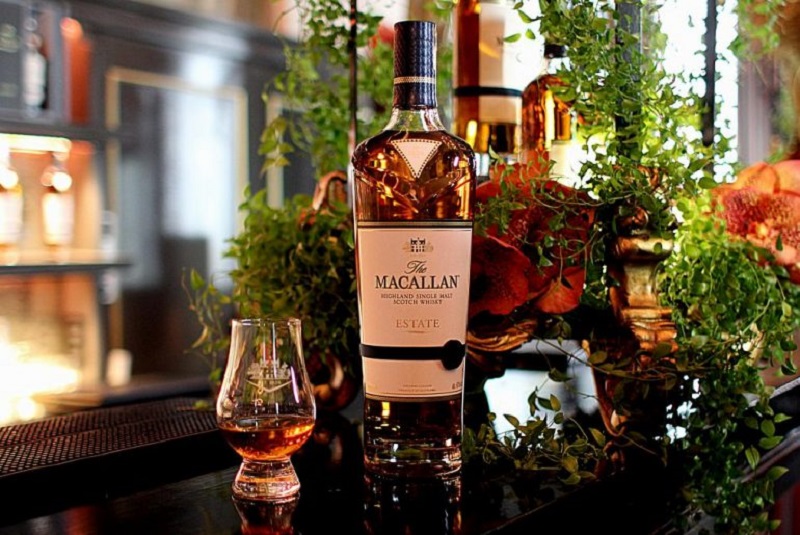
Now that you’re aware of which type of wood is used, let’s look at the cask types. This is where we get into the flavor. The following are most often used and often in combination:
- Bourbon casks that previously held Jack Daniels or Jim Beam Bourbon
- American oak sherry casks that previously held Oloroso or Pedro Ximenez sherry
- European oak sherry casks that previously held Oloroso or Pedro Ximenez sherry
Where it gets complex is when “Finish” is used – that is, a finishing cask to give a completely new dimension or character. It can be casks used for port wine, red wine, or even Sauternes, which Glenmorangie has experimented with.
Bonus info: The Macallan has a so-called “Masters Of Wood” employed to monitor and select the trees in the Spanish forests.
4. Neat or “On the rocks”
If a whisky is drunk without ice, it’s called “neat,” so if you’re abroad, you can ask for your whisky “neat.” Some prefer to add ice, as it lightens the whisky a bit and actually opens it up because the water dilutes it a little. Whether you’re into one or the other is entirely up to you. Personally, I prefer it neat, as the cold also masks the flavor a bit, so even though the alcohol easily sneaks over 40% and the spirit can fill the mouth, it is, for me, the best method – try it out!
Bonus info: Some use granite stones, which can be chilled as “ice cubes,” so the whisky is not diluted.
5. Smoke or not?
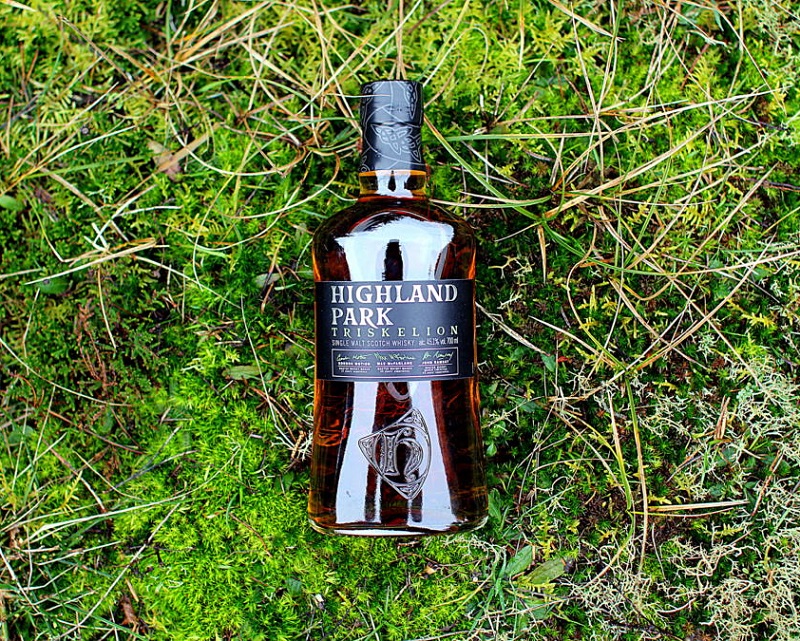
Not all whiskies are smoky. When I’m out as “Whiskytossen” I often encounter the perception that all Scotch whisky is smoky. It certainly is not. However, there is a lot from the island of Islay that practices smoke. Smoke is measured in PPM Parts per million, where peat is used to create smoke, which the malted barley absorbs while it dries. Some of the most smoky whiskies are around 55-60 PPM, such as Ardbeg and Laphroaig, while Highland Park’s most smoky whisky ever is about 3 PPM.
Bonus info: The longer a whisky is aged, the more the smoke will disappear.
I hope this has given some inspiration, these were 5 things I myself wish I knew when I started enjoying these noble drops – we have only scratched the surface, so let me know if there will be a version two with more knowledge about whisky – cheers and happy International Whisky Day!