


Learn to make lactofermented gooseberries that will add a unique, tart flavor to your dishes. Discover how you can transform your everyday cooking with this simple fermentation technique.
Recipe for lactofermented gooseberries
In the world of gastronomy, fermentation is an ancient technique that transforms simple ingredients into complex and profound flavor experiences.
Lacto-fermented gooseberries are no exception, and this recipe will guide you through the process of creating these little bursts of flavor. These fermented berries can add a tangy and fruity depth to a wide range of dishes.
I made them in conjunction with our film shoot at the summer house, and they were paired with a summery delight: grilled turbot, grilled pointed cabbage, and a classic beurre blanc sauce. This trio of accompaniments complements the delicate texture and flavor of the fish, while the gooseberries provide a fermented twist that will awaken your taste buds.
Servings: kilogram
Lactofermented Gooseberries
Learn to make lactofermented gooseberries that will add a unique, tart flavor to your dishes. Discover how you can transform your everyday cooking with this simple fermentation technique.
Equipment
- 1 Vacuum Sealer
Ingredients
- 1 kg Gooseberry ripe - green or red
- 20 gram Salt without iodine
Instructions
Preparation
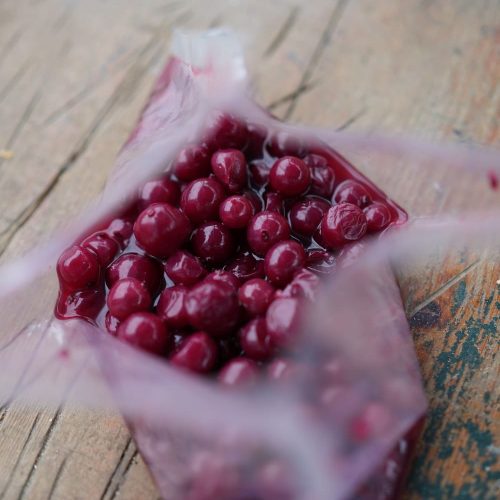
- Put the berries and salt in a vacuum bag.
- Make sure the bag is long enough to be reopened and resealed.
- Shake it well together.
- Distribute the berries so they lie in a single layer as much as possible.
- Seal the vacuum bag.
Fermentation
- Let them sit in a warm place. Ideally, they should be at 28 degrees Celsius (82 degrees Fahrenheit) for 5-6 days.
- If you don't have that temperature option, let them ferment at room temperature (about 20-22 degrees Celsius (68-72 degrees Fahrenheit)) - it will take a few days longer.
- During the process, the bag will swell and need to be "burped," i.e., the air needs to be let out. This is a bit more complicated than if you had a canning jar where you just open the lid. Here you'll need to cut a small hole in the top of the vacuum bag to let the air out. Then it needs to be resealed.
- Taste them; when they are a bit salty and quite tart, they should be taken out.
- Strain them in a fine-mesh strainer and now they should be stored in the fridge.
- They can keep for a few days. Alternatively, they can be vacuum-packed again and frozen.